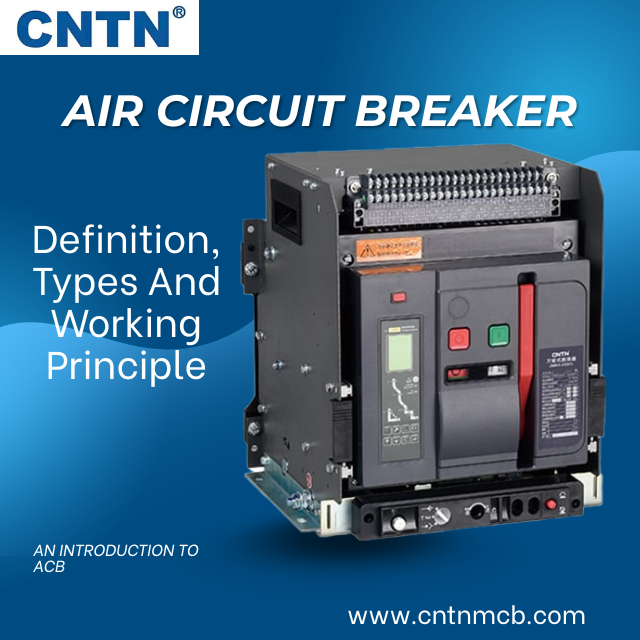
Disjoncteurs à air (ACB) constituent des outils essentiels pour la protection des installations électriques à l'heure actuelle.
Ils assurent la sécurité des installations électriques à basse tension en cas de défaillances électriques et de surcharges.
Leur intervention rapide permet d'éviter les dommages matériels, les coupures de courant et les incendies d'origine électrique.
Les disjoncteurs à air sont utilisés dans les bâtiments commerciaux, les installations industrielles et même dans les réseaux de distribution d'électricité.
Ils offrent une capacité de coupure élevée, un fonctionnement fiable et une longue durée de vie.
Toutes ces caractéristiques en font des composants adaptés à une utilisation en électrotechnique.
Ce guide fournit des informations sur la définition d'un disjoncteur à air, ses composants, son fonctionnement, les types d'installations, ses caractéristiques techniques, ses utilisations, ses avantages, les techniques d'entretien et les critères de sélection.
Vous saurez également comment choisir le disjoncteur à air adapté à différents systèmes électriques.
Qu'est-ce qu'un disjoncteur pneumatique ?
Un disjoncteur à air est un appareil de commutation de protection utilisé dans les réseaux électriques basse tension. Il coupe automatiquement l'alimentation électrique en cas de surcharge, de court-circuit ou d'autres défauts.
Le rôle principal du disjoncteur à air est de protéger les appareils électriques et le câblage contre tout dommage éventuel.
La plupart des disjoncteurs à air sont utilisés dans des réseaux électriques à basse tension dont la tension ne dépasse pas 1 000 volts.
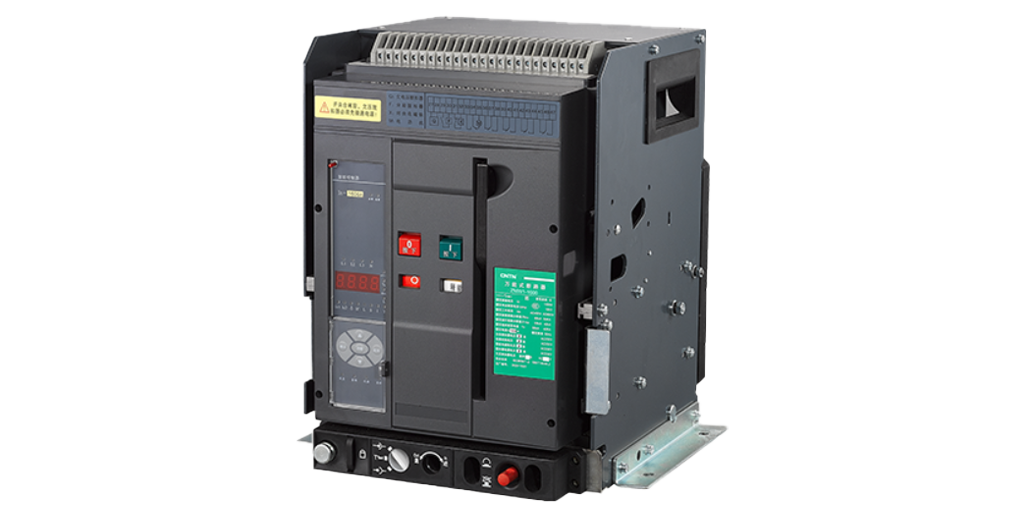
Principaux composants d'un disjoncteur à air
Plusieurs composants jouent un rôle essentiel pour assurer la protection des circuits de manière sûre et efficace.
Tous les composants ont une fonction importante à remplir, tant en conditions normales qu'en cas de défaillance.
Les contacts fixes et mobiles permettent de conduire le courant dans des conditions normales.
Le pare-arc sert à éteindre l'arc électrique, tandis que le mécanisme de commande ouvre ou ferme l'interrupteur.
Le dispositif de déclenchement détecte tout défaut électrique et envoie des signaux de déclenchement.
Les bornes principales constituent les connexions entre le disjoncteur et le circuit électrique, tandis que les composants isolants empêchent les fuites électriques.
Comment fonctionne un disjoncteur à air ?
Dans des conditions normales, le courant électrique circule à travers les contacts sans aucune interruption.
Toutefois, en cas de surcharge ou de court-circuit, le dispositif de déclenchement détecte un courant électrique anormalement élevé et actionne le mécanisme de commande afin d'écarter les contacts les uns des autres, ce qui provoque un arc électrique.
L'arc passe ensuite dans le conduit d'arc, où il est refroidi par l'air ambiant qui s'y trouve, ce qui éteint l'arc.
Ce procédé permet d'interrompre le circuit électrique en toute sécurité.
Types de disjoncteurs à air
Les disjoncteurs à air modernes se divisent en deux catégories en fonction de leur mode d'installation.
Le choix entre les disjoncteurs à air fixes et les disjoncteurs à air extractibles dépend de divers facteurs.
1 : Disjoncteur à air fixe (ACB fixe)
Le disjoncteur à air fixe est préinstallé dans le tableau électrique lui-même.
Il est connecté au système et ne doit en aucun cas être supprimé.
Ce type de disjoncteur occupe moins d'espace lors de l'installation et s'avère également plus économique que les disjoncteurs à tiroir.
Le disjoncteur à circuit d'air fixe est utilisé dans les applications où l'entretien est peu fréquent.
Ils sont largement utilisés dans les bâtiments commerciaux, les installations industrielles et les tableaux de distribution électrique.
2 : Disjoncteur à air extractible (ACB extractible)
Disjoncteur amovible, également appelé disjoncteur à air extractible.
Il s'agit d'un type de disjoncteur dont la conception amovible permet aux utilisateurs de l'installer et de le retirer facilement sans avoir à débrancher le câblage fixe.
Grâce à sa conception « rack-in/rack-out », son inspection, ses tests et son remplacement sont facilités, et la maintenance peut s'effectuer assez rapidement.
Les disjoncteurs à tiroir sont généralement installés dans les hôpitaux, les centres informatiques, les postes électriques, les installations industrielles, etc.
Disjoncteurs à air fixes ou à extraction
Les disjoncteurs à air fixes et à tiroir permettent tous deux de protéger efficacement les réseaux électriques à basse tension.
Le choix entre les deux dépendra des besoins en matière de maintenance, de la facilité d'installation et d'utilisation, ainsi que de l'importance accordée à la disponibilité du système.
| Facteur de comparaison | Disjoncteur à circuit d'air fixe | Disjoncteur à circuit d'air à extraction |
|---|---|---|
Méthode d'installation |
Installé de manière permanente |
Conception permettant l'insertion et le retrait en rack |
Maintenance |
Nécessite un arrêt |
Un entretien simple et plus rapide |
Remplacement |
Il faut plus de temps |
Remplacement rapide |
Sécurité opérationnelle |
Sécurité standard |
Une sécurité opérationnelle accrue |
Temps d'arrêt |
Plus long |
Plus court |
Coût initial |
Inférieur |
Plus élevé |
Flexibilité |
Limité |
Excellent |
Applications typiques |
Panneaux destinés aux secteurs commercial et industriel |
Hôpitaux, centres de données, services publics |
Caractéristiques nominales et spécifications techniques des disjoncteurs à air
La connaissance des caractéristiques techniques aidera les ingénieurs et les électriciens à choisir le disjoncteur à air approprié.
Un dimensionnement correct garantit la sécurité, assure des performances fiables et protège les équipements contre les pannes.
| Spécifications | Valeur typique |
|---|---|
Tension nominale |
Jusqu'à 1 000 V CA |
Courant nominal |
630 A – 6 300 A |
Capacité de rupture |
25 à 150 kA |
Courant admissible de courte durée |
25 à 100 kA |
Nombre de pôles |
3 pôles / 4 pôles |
Fréquence de fonctionnement |
50/60 Hz |
Type de déclencheur |
Thermo-magnétique ou électronique |
Durée de vie mécanique |
Jusqu'à 20 000 opérations |
Durée de vie électrique |
Jusqu'à 10 000 opérations |
Normes applicables |
IEC 60947-2 |
Avantages des disjoncteurs à air
Grâce à leur capacité de coupure élevée, les disjoncteurs à air sont particulièrement adaptés aux réseaux électriques exigeants.
Ils garantissent une protection efficace sans compromettre la fiabilité des performances en cas de surcharge ou de court-circuit.
L'autre avantage de ces disjoncteurs réside dans leur conception mécanique robuste et leur capacité à s'adapter aux différents réglages de protection.
Leur structure permet de les inspecter, de les entretenir et de les exploiter facilement.
Limites des disjoncteurs à air
Les disjoncteurs à air sont plus volumineux que bon nombre d'autres disjoncteurs basse tension.
Ils ont besoin de plus d'espace d'installation dans les tableaux électriques.
Leur coût initial est plus élevé et ils nécessitent un entretien périodique pour garantir leur efficacité.
Les disjoncteurs à air sont destinés à des applications basse tension et leur installation nécessite l'intervention d'un professionnel.
Applications des disjoncteurs à air
- Les disjoncteurs à air sont très répandus dans les lieux où il est nécessaire de garantir la protection du réseau électrique.
- Ils assurent la sécurité des installations électriques de grande valeur.
- On les trouve dans les usines, les bureaux commerciaux, les tableaux de distribution électrique, les postes de transformation, les centres de données, les hôpitaux, les installations solaires, etc.
Disjoncteur à air vs disjoncteur moulé (MCCB)
Les disjoncteurs à air et les disjoncteurs moulés servent tous deux à protéger les installations électriques.
Toutefois, elles sont utilisées pour des applications différentes en fonction de leur intensité nominale, de leur pouvoir de coupure et de leurs exigences en matière d'entretien.
| Facteur de comparaison | Disjoncteur à air (ACB) | MCCB |
|---|---|---|
Plage de tension |
Basse tension |
Basse tension |
Intensité nominale |
Jusqu'à 6 300 A |
Jusqu'à 1 600 A |
Capacité de rupture |
Plus élevé |
Modéré |
Capacité de protection |
Avancé et réglable |
Protection standard |
Maintenance |
Facile à inspecter |
Entretien minimal |
Taille |
Plus grand |
Compact |
Coût |
Plus élevé |
Inférieur |
Applications typiques |
Tableaux de distribution principaux |
Circuits de dérivation |
Disjoncteur à air vs disjoncteur à vide (VCB)
Disjoncteurs à air et vide disjoncteurs utilisent différentes méthodes d'extinction d'arc. Le choix du disjoncteur approprié dépend de la tension du réseau, de l'environnement d'exploitation et des exigences en matière de maintenance
| Facteur de comparaison | Disjoncteur à air (ACB) | Disjoncteur à vide (VCB) |
|---|---|---|
Milieu d'extinction d'arc |
Air |
Vide |
Application de tension |
Basse tension |
Moyenne tension |
Interruption du spectacle |
Excellent |
Excellent |
Exigences en matière d'entretien |
Périodique |
Faible |
Durée de vie |
Long |
Très long |
Très long |
Panneaux d'intérieur |
À l'intérieur et à l'extérieur |
Coût |
Modéré |
Plus élevé |
Applications typiques |
Distribution basse tension |
Réseaux moyenne tension |
Problèmes courants liés aux disjoncteurs d'air
Les disjoncteurs à air peuvent présenter des problèmes au fil du temps et en cas de mauvaises pratiques d'entretien.
Il est important de détecter les problèmes dès leur apparition afin d'éviter tout dommage matériel et toute coupure de courant imprévue.
Parmi les problèmes qui peuvent survenir, on peut citer les déclenchements intempestifs, les défauts de déclenchement, l'érosion des contacts, l'érosion par arc électrique, la surchauffe, les connexions électriques desserrées, les dysfonctionnements opérationnels et l'encrassement.
Guide d'entretien des disjoncteurs à air
La maintenance est essentielle pour garantir la sécurité et l'efficacité d'un ACB.
Une maintenance programmée permet de prolonger la durée de vie des équipements et de réduire au minimum les temps d'arrêt imprévus.
- Commencez l'inspection en vérifiant s'il y a des composants desserrés, des isolants usés ou des traces de brûlure sur certaines pièces.
- Nettoyez les contacts pour éliminer la saleté et les dépôts de carbone.
- Le mécanisme de fonctionnement doit être huilé pour garantir un fonctionnement sans à-coups.
- Assurez-vous que les bornes électriques sont bien serrées et que les câbles ont été vérifiés.
- Effectuer l'essai du déclencheur afin de s'assurer de son bon fonctionnement en cas de surcharge et de court-circuit.
- Vérifiez la résistance d'isolement.
- Il est important de respecter le calendrier d'entretien recommandé par le constructeur.
Comment choisir le disjoncteur à air adapté ?
Le choix de disjoncteurs à air adaptés garantit la sécurité du système et améliore ses performances opérationnelles.
Le choix de disjoncteurs pneumatiques inadaptés entraînerait une protection insuffisante et des coûts de maintenance plus élevés.
Il convient de choisir le courant nominal et la tension nominale adaptés en fonction de la charge électrique.
La capacité de coupure doit être vérifiée en tenant compte du courant de défaut maximal.
En fonction des besoins en matière d'entretien, il est possible d'opter soit pour un disjoncteur à air de type fixe, soit pour un modèle à tiroir.
Il convient également de déterminer le nombre de pôles et les fonctions de protection.
Il convient de tenir compte de l'environnement d'installation lors du choix.
Il convient de toujours choisir des produits adaptés, conformes aux normes CEI, provenant de fabricants réputés et dotés d'une certification de qualité.
Réflexions finales
Un disjoncteur à air est un dispositif de protection indispensable utilisé dans les installations électriques basse tension actuelles.
Le disjoncteur protège l'installation contre les surcharges et tout autre défaut électrique. Il est important d'utiliser des disjoncteurs à air de qualité et de les entretenir régulièrement.
renforce la sécurité électrique, évite les temps d'arrêt inutiles et prolonge la durée de vie des équipements. Si les acheteurs souhaitent nous contacter,
fabricant de disjoncteurs à air de haute qualité, vous devez faire appel à CNTN Electric.
Vous pouvez nous envoyer un message via WhatsApp ou WeChat. Nous répondrons à votre demande dans les plus brefs délais.

Questions fréquemment posées
Qu'est-ce qu'un disjoncteur à air (ACB) ?
Un disjoncteur à air est un interrupteur de sécurité basse tension utilisé pour couper le passage du courant électrique en cas de surcharge ou de court-circuit.
Comment fonctionne un disjoncteur à air ?
Il détecte le courant anormal, ouvre les contacts, éteint l'arc électrique à l'aide d'air et coupe le circuit électrique défectueux en toute sécurité.
Quels sont les deux principaux types de disjoncteurs à air ?
Il existe deux grands types de disjoncteurs à air : les disjoncteurs à air fixes et les disjoncteurs à air extractibles.
Quelle est la différence entre les disjoncteurs à circuit d'air fixes et ceux à circuit d'air extractible ?
Les disjoncteurs ACB fixes sont installés de manière permanente, tandis que les disjoncteurs ACB extractibles peuvent être retirés à des fins d'inspection, d'entretien, de test et de remplacement.
Où utilise-t-on généralement les disjoncteurs à air ?
Ces appareils sont généralement utilisés dans les usines, les bâtiments commerciaux, les hôpitaux, les centres de données, les postes de transformation et les réseaux de distribution basse tension.
Pourquoi un disjoncteur à air se déclenche-t-il ?
Le disjoncteur à air se déclenche en cas de surcharge, de court-circuit, de mise à la terre ou d'autres anomalies électriques nécessitant une intervention.
À quelle fréquence faut-il effectuer l'entretien d'un disjoncteur à air ?
Les inspections doivent être effectuées conformément au calendrier d'entretien établi par le fabricant, ainsi qu'après une utilisation intensive ou en cas de panne électrique majeure.
Comment choisir le disjoncteur à air adapté ?
Choisissez l'intensité nominale, la tension, la capacité de coupure, le nombre de pôles, le type d'installation, la protection et le fabricant agréé appropriés.
Quels sont les facteurs qui influent sur la durée de vie d'un disjoncteur à air ?
L'entretien, le fonctionnement, les opérations de commutation, la charge électrique, l'environnement et l'installation sont autant de facteurs qui influent sur la durée de vie du disjoncteur.
Quelles sont les normes applicables aux disjoncteurs à air ?
La plupart des disjoncteurs à air sont conformes aux normes internationales telles que la norme CEI 60947-2, entre autres.