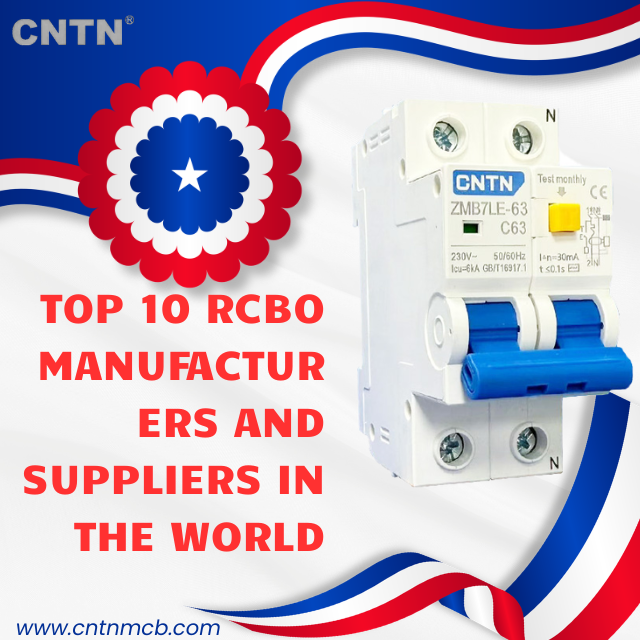
RCBO market is expected to reach USD 2.45 billion by 2025 owing to the increase in demand for electrical protection around the world.
The need for effective residual-current protection will remain due to construction needs and electrical protection standards.
It is expected to be worth about USD 4.5 billion by 2035 due to increasing circuit protection needs.
RCBO is an electrical component that merges the functions of residual current protection with overcurrent protection in one compact unit. Its uses include providing protection from overload, short circuit, and residual current.
The selection of an RCBO manufacturers cannot be done based on price comparisons alone because quality is the key factor that determines safety and reliability.
Here is the list below of the top 10 RCBO manufacturers and suppliers in the world.
1. Schneider Electric

Manufacturer Background
Schneider Electric is one of the world’s leading suppliers of energy management systems and electrical distribution technologies.
It produces such categories of its products as circuit breakers, automation, energy management, and digital electric systems.
Furthermore, Schneider Electric provides Acti9 iDPN Vigi RCBO products that are specifically intended for DIN-rail distribution boards.
RCBO Product Range
- Acti9 iC60 RCBO:Compact combined overcurrent and leakage protection.
- Acti9 iC60 2P RCBO:Two-pole protection for distribution applications.
- Acti9 iC60 3P RCBO: Three-pole protection for suitable electrical systems.
- Acti9 iC60 4P RCBO:Four-pole configuration for multi-phase installations.
- Acti9 iDPN Vigi:Integrated RCBO protection up to 40A.
Key Strengths
- Global strength in electrical distribution and engineering.
- Space-saving Acti9 RCBO solutions facilitate efficient installations.
- International distribution and technical support services.
- Various options meet varied needs for electric protection.
Why Distributors May Consider Schneider Electric?
Schneider Electric provides distributors with the opportunity of having an already established electrical brand that is internationally recognized along with wide product availability.
2. ABB

Manufacturer Background
ABB is an internationally-based firm dealing in technological solutions in the sectors of electrification, automation, motion, and industry.
ABB offer several types of products in the field of ectrification include modular circuit protection solutions suitable for use in residential, commercial, industrial, and infrastructure applications.
RCBO Product Range
- DS301C:Compact 1P+N electromechanical RCBO protection.
- DS201: Compact 1P+N RCBO for single-phase circuits.
- DS202CR:Two-pole RCBO for compatible applications.
- DS203NC:Three-phase or 3P+N protection solution.
- DS202:Factory-assembled RCBO for higher-current applications.
Key Strengths
- Electromechanical and electronic protection technologies available.
- Multiple pole configurations support different circuit arrangements.
- Strong global electrification and industrial engineering expertise.
Why Distributors May Consider ABB?
ABB offers its distributors a wide range of RCBO products that include small-sized single-phase models as well as multi-phase models.
This diversity in the technical aspect will assist the distributors to cater to all forms of electrical protection needs from a reliable source.
3. CNTN Electric
Manufacturer Background
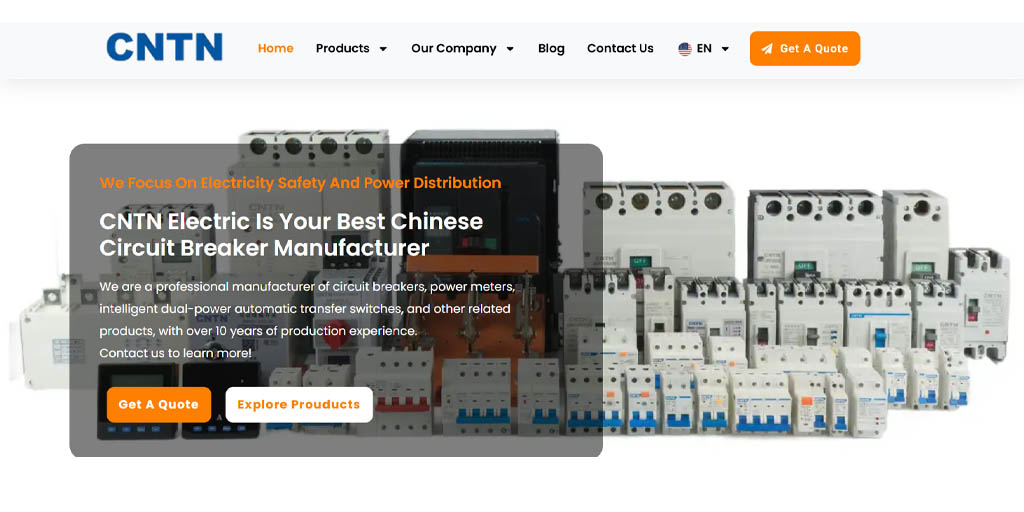
CNTN Electric produces various low-voltage electrical protection equipment in China and provides them to the international market.
They produces circuit breakers, residual current protection devices, and custom-made electrical protection equipment.
RCBO Product Range
- DZ47LE-63 2P RCBO:Electronic RCBO for compact circuit protection.
- DZ47LE-63 1P RCBO:Single-pole RCBO for electrical distribution.
- ZMB7LE-80:Higher-current RCBO for demanding applications.
- ZMB7LE-63 4P:Four-pole RCBO for multi-phase systems.
- ZMB6L-125: Higher-capacity residual-current protection solution.
Key Strengths
- Broad RCBO configurations support different electrical applications.
- OEM and customized product opportunities for international buyers.
- Competitive manufacturing position within China’s electrical sector.
Why Distributors May Consider CNTN Electric?
CNTN Electric is another option that may be of interest to distributors looking for Chinese manufacturing facilities and adaptable RCBO products.
Such adaptability may prove useful to importers who cater to various residential and industrial segments.
4. Siemens

Manufacturer Background
Siemens is one of the leading global technology companies and has vast experience in the field of electrification, automation, infrastructure, and industrial systems.
RCBO Product Range
- SENTRON 5SV1 RCBO:Compact combined residual-current protection.
- SENTRON 5SV1 Type A:Type A RCBO protection for modern loads.
- SENTRON 5SV1 Type F: Type F protection for suitable equipment.
- SENTRON 5SM2 Type A RC Unit: Flexible RCBO functionality.
- SENTRON 5SM2 Type F RC Unit:Enhanced residual-current protection.
Key Strengths
- Strong SENTRON electrical protection portfolio and engineering.
- Type A and F solutions support modern electrical loads.
- Extensive industrial automation and infrastructure expertise.
Why Distributors May Consider Siemens
There is the possibility that Siemens could be appealing to distributors targeting industries that need engineering standards.
It would be prudent for distributors to consider the precise availability, ratings, certifications, regional approvals, pricing, and lead times for particular Siemens models.
5. Eaton

Manufacturer Background
Eaton is an international intelligent power management company catering to the electrical, industrial, commercial, infrastructure, and residential segments.
Its range of electrical protection products comprises circuit breakers and RCBOs that provide reliable protection in varying installation environments.
RCBO Product Range
- xPole PXK RCBO:Combined residual-current and overcurrent protection.
- xPole PKN6/M RCBO:Compact 1P+N circuit protection.
- xPole eRB6/M RCBO:Residential and commercial protection.
- xPole PKNM RCBO:Compact protection for distribution applications.
- xPole PKN6 RCBO: Circuit protection for suitable installations.
Key Strengths
- Established global power-management and electrical expertise.
- Products support residential and commercial switchgear applications.
- Strong technical documentation and conformity information.
Why Distributors May Consider Eaton?
Eaton provides distributors with an acclaimed electrical protection lineup that includes proven xPole RCBO series for both residential and commercial installations.
6. Legrand

Manufacturer Background
Legrand is a worldwide expert in electrical and electronic building systems in residential, commercial, and industrial sectors.
Some of the products in their protection line include modular circuit breakers and RCBOs, which cater to various electrical distribution needs.
RCBO Product Range
- DX³ 6000 RCBO:Compact protection for domestic circuits.
- DX³ 10000 RCBO:Higher breaking-capacity protection for demanding installations.
- DX³ Type A RCBO:Detects AC and pulsating DC leakage.
- DX³ Type AC RCBO:Designed for conventional AC residual currents.
- DX³ Type F RCBO:Handles high-frequency residual-current conditions.
Key Strengths
- Broad DX³ RCBO product and configuration range.
- Multiple residual-current detection technologies available.
- Suitable for residential and commercial distribution applications.
Why Distributors May Consider Legrand
Under Legrand’s existing DX³ platform, there are a number of RCBOs available to distributors.
This provides distributors the flexibility of sourcing products for various applications.
7: Hager
Manufacturer Background
Hager manufactures products related to the distribution and protection of electricity in residences and buildings.
They offer several RCBO products comprises small-sized units intended to integrate overcurrent and residual-current protection.
RCBO Product Range
- ADA916U RCBO:1P+N, 16A, 30mA Type A.
- ADA940U RCBO:1P+N, 40A, 30mA Type A.
- ADA990U RCBO:1P+N, 40A, C-curve Type A.
- ADB416U RCBO:One-module, 16A, 10kA protection.
- ADB432U RCBO:One-module, 32A, 10kA protection.
Key Strengths
- Compact one-module RCBO options available.
- Strong range for residential distribution boards.
- Type A products support modern electrical loads.
- Multiple current and pole configurations available.
Why Distributors May Consider Hager?
Hager offers suppliers flexibility in RCBO types and electrical specifications.
This will enable the suppliers to tailor their products to the customer’s installation requirements.
8: Fuji Electric

Manufacturer Background
Fuji Electric produces electrical and industrial products like circuit breakers.
Some of its products are the RCBO range which come in different pole designs for low-voltage protection systems.
RCBO Product Range
- BC32E1CL-1N:1P+N RCBO for single-phase circuits.
- BC50E1CL-1N:Higher-current 1P+N protection option.
- BC32E1CL-2P:Two-pole RCBO for distribution circuits.
- BC32E1CL-3P:Three-pole RCBO for three-phase loads.
- BC32E1CL-3N:Three-phase plus neutral protection.
Key Strengths
- Wide selection of multi-pole RCBO configurations.
- Established electrical and industrial equipment expertise.
- Options for single-phase and three-phase systems.
- Multiple current ratings support varied applications.
Why Distributors May Consider Fuji Electric
The RCBO design of Fuji Electric can accommodate distributors supplying customers with various supply systems.
Their products may be taken into account in case customers need proven electrical equipment and several protection designs.
9: LS Electric

Manufacturer Background
LS Electric provides electrical distribution equipment and automation systems such as miniature circuit breakers and residual current protection devices.
RCBO Product Range
- RKP Series:RCBO protection against ground faults and overcurrent.
- RKS Series:RCBO range for residential circuit protection.
- RKS-b Series:Alternative RCBO configuration for distribution systems.
- RKJ Series:Multi-pole RCBO protection for electrical circuits.
- RKJ-b Series:Compact RCBO option with varied ratings.
Key Strengths
- Broad RCBO family selection for low-voltage applications.
- Multiple pole and current configurations available.
- Options based on different tripping characteristics.
Why Distributors May Consider LS Electric
In addition to offering different types of switchgear to meet the requirements of the customer, LS Electric provides various families of RCBOs rather than depending on just one product range.
10: CHINT

Manufacturer Background
CHINT is one of the largest makers of electrical equipment that provides products for low voltage protection in residential, commercial, and industrial installations.
RCBO Product Range
- NXBLE-40 RCBO:6–40A protection for AC circuits.
- NXBLE-40 Type C:Standard thermal-magnetic tripping configuration.
- NXBLE-40 Type D:Higher-inrush load protection option.
- NXBLE-40 30mA:Enhanced residual-current protection.
- NXBLE-40 10mA:Higher-sensitivity leakage protection option.
Key Strengths
- Competitive low-voltage protection product portfolio.
- NXBLE-40 supports multiple current ratings.
- Type C and D curves provide load flexibility.
- IEC 61009-1 compliance is documented.
Why Distributors May Consider CHINT?
CHINT provides an ideal solution of RCBO to distributors catering to residential and commercial electricity needs.
The following requirements help in making decisions about various circuit conditions.
How to Choose the Right RCBO For Your Application?
Selecting the appropriate RCBO goes beyond considering only the current rating and cost.
The appropriate type should correspond to the load, the electrical system, residual currents, and safety needed.
The distributor should also ensure conformity to relevant standards, certifications, breaking capacity, and technical specifications.
1: Identify the Residual Current Type
First, identify if the application needs AC Type, A Type, F Type, or B Type residual current detection.
A Type is often good enough for modern electronic devices, whereas F Type and B Type can handle complicated leakage currents.
For instance, inverters, heat pumps, EV chargers, and photovoltaics might need particular residual current protection.
It’s always best to refer to the device’s manufacturer’s recommendation before deciding on the RCBO type.
2: Select Residual Current Sensitivity
Residual current sensitivity should be chosen based on the purpose of protection and the installation conditions.
The standard ratings are 10mA, 30mA, 100mA, and 300mA. A 30mA RCBO is generally applied for the provision of additional protection against electric shock.
Higher values of sensitivity can be used in case of other types of protection.
3: Match the Rated Current
Choose the RCBO rated current based on the current design of the circuit and the ampacity of the conductor.
The standard ratings available for the RCBO are 6A, 10A, 16A, 20A, 32A, 40A, and 63A. It is not appropriate to select a higher rating for preventing unwanted tripping.
4: Choose the B, C, or D Curve
Choose the tripping curve in relation to the current during the starting process as well as its characteristics.
Products with a B-curve will be suitable for low inrush load, while products with a C-curve can handle moderate inrush.
D-curve devices are made for higher inrush cases with acceptable installation conditions.
5: Verify Pole Configuration
It should be verified if the electrical system needs 1P+N, 2P, 3P, 3P+N, or 4P protection depending on the system, neutral connections, and the need for switching.
1P+N protection is used for single phase installations. Depending on the installation, three-phase systems may require three or four pole protections.
6: Check Breaking Capacity
Check the breaking capacity of the RCBO against the prospective short circuit current at the point of installation.
Typical breaking capacities are 6kA, 10kA, and above for more critical applications.
The breaking capacity should not be chosen randomly.
It must be able to safely break the maximum fault current that can arise within the installation.
7: Confirm Standards and Certification
RCBOs need to be checked against the standards to ensure compliance before they can be bought.
IEC/EN 61009-1 is one of the standards applicable to RCBOs with integral overcurrent protection.
There are also some other standards that can be applied in special cases, such as those that concern Type F and Type B residual current protection.
8: Evaluate the Actual Load
Last but not least, it is essential to consider the equipment that will be installed on the same circuit before choosing an RCBO.
The lighting, plugs, motor, heat pump, EV charger, photovoltaic inverters, and industrial equipment may have their own particularities.
It will be wise to study the equipment’s manufacturer requirements.
Final Thoughts
Choosing an RCBO must not be solely guided by cost, but rather by its appropriateness to be used for the particular purpose it is supposed to fulfill.
Technical considerations include rated current, residual-current type, sensitivity, tripping curve, poles, and breaking capacity.
For distributors and importers, certification, product uniformity, cost, MOQ, capacity, lead time, and after-sales service will also become important factors to consider.
Click on CNTN Electric to learn more about related products.
FAQs
What is an RCBO and what does it protect against?
A circuit breaker that can detect both earth leakage current and overcurrent in the circuit is known as an RCBO.
How do I choose the correct RCBO rating?
Determine the rating based on the design current of the circuit, ampacity of the conductors, nature of the loads, and residual current sensitivity.
What is the difference between Type A and Type B?
Type A is capable of detecting both alternating current and pulsating DC leakage currents, while Type B can detect DC and complex leakage currents.
When should I use B, C, or D curves?
Type B curves are suitable for low inrush loads, Type C curves are used for medium inrush loads, and Type D curves are used for high inrush loads.
What RCBO sensitivity is suitable for residential applications?
The sensitivity of 30 mA may be employed to provide further security from electric shocks in domestic circuits according to local electricity laws.
What breaking capacity should an RCBO have?
Select the breaking capacity based on the short circuit current expected at the point of installation, usually 6kA or 10kA.
Which standards should distributors check?
The distributor is supposed to verify the IEC/EN 61009-1 standards and any other standards that relate to the RCBO.
Can manufacturers provide OEM or private-label RCBOs?
Most companies provide OEM or private labeling services; however, it is wise for buyers to verify their customization options, certifications, MOQs, testing and manufacturing needs.
What should I check in an RCBO datasheet?
Verification of the rated current, voltage, number of poles, residual-current system, sensitivity, curve of tripping, breaking capacity, standards, dimensions, connections, and operational features.
How should I compare RCBO manufacturers before bulk orders?
Evaluate technical specifications, certifications, quality of products, manufacturing capabilities, prices, MOQs, lead time, testing processes, warranty policy, and after-sales service.