
DC Surge Protective Device
- Over 10 years of experience in manufacturing DC Surge Protective Device.
- Fast production delivery capability
- OEM and ODM opitional
- We provide 24-hour online service to you
Our products
The core function of a DC surge protector is to clamp sudden overvoltage surges in DC circuits. By quickly conducting, shunting, or absorbing surge energy, it limits the circuit voltage within a safe range that equipment can withstand. Ultimately, this prevents sensitive electronic components at the backend (such as chips, capacitors, controllers, etc.) from being broken down or burned out by overvoltage, or from suffering performance damage or shortened service life due to instantaneous impacts.
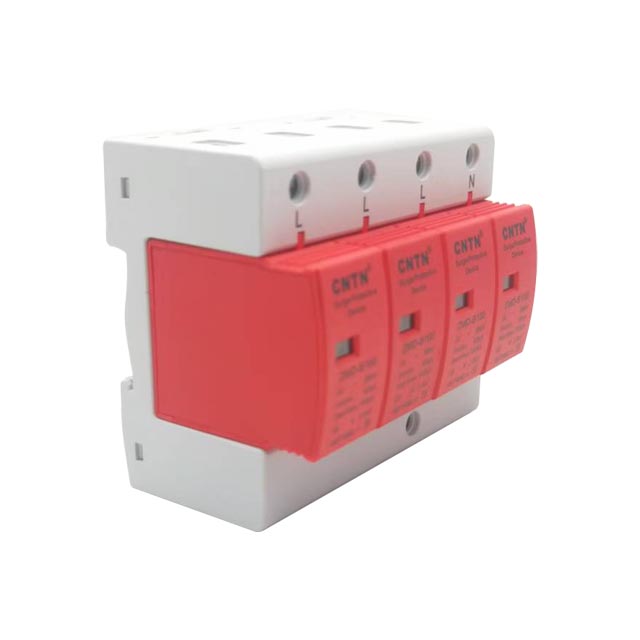
Application Scenarios of DC Surge Protective Device

Application Of DC SPD are applied in Electric Vehicle
DC surge protectors are installed in electric vehicle (EV) charging piles (especially DC fast-charging piles) and on-board DC power circuits. They suppress surges caused by grid voltage spikes during charging, or transient currents during vehicle power-on/power-off, protecting charging pile modules, on-board batteries, and vehicle control units (VCUs).
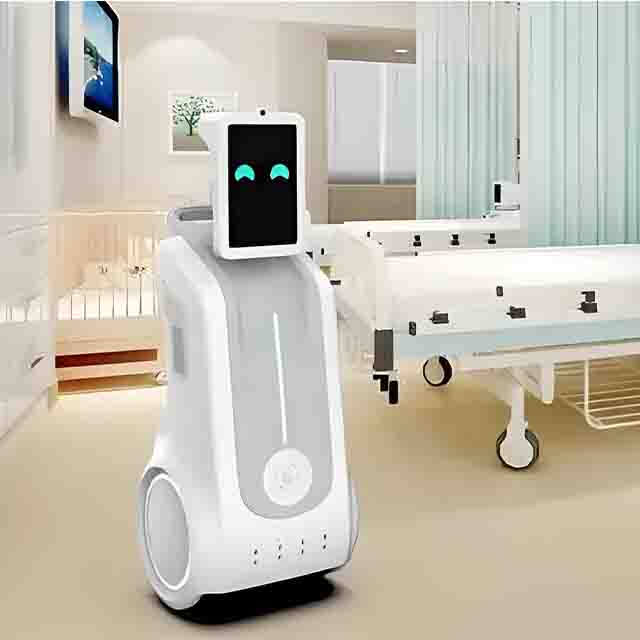
When applied to mobile medical equipment, DC SPD can protect precision components to extend the equipment’s service life and ensure the safety of patients and operators by avoiding electric shock hazards. Additionally, DC surge protectors feature a compact and lightweight design, making them suitable for the limited internal space of portable devices.

Application Of DC SPD are used in Factory

DC SPD are applied in the New Energy Powe
DC SPD are key safety components in new energy systems. They suppress surges caused by lightning strikes on photovoltaic (PV) arrays or grid voltage fluctuations, protecting core components like PV inverters, junction boxes, and battery energy storage units from overvoltage damage.

DC Surge Protective Device are applied in Data Center
By blocking surge risks, protecting core equipment and backup power supplies, and reducing operation and maintenance costs, DC surge protectors (DC SPDs) have become key components. They not only “prevent damage” but also reduce risk points, ensuring the continuous and stable operation of data center services.

DC SPD are applied in the Communication Base Station
DC surge protectors are installed in the DC power circuits of base station equipment (such as transceivers and antennas). They suppress surges caused by lightning strikes on communication towers or power grid fluctuations, protecting the main base station equipment and backup batteries.
What is your application?
What is a DC surge protector?
A DC surge protector is the “lightning protection device” for DC circuits.
It monitors instantaneous high voltages in the circuit caused by lightning strikes or equipment startup/shutdown.
Upon detecting a dangerous voltage, it immediately diverts the excess current to the ground, protecting valuable DC equipment such as photovoltaic inverters, charging stations, and energy storage batteries from being damaged.
How does a DC surge protector work?
When the DC line voltage is normal, the core component of the surge protector acts like a “closed door,” with extremely high resistance, consuming virtually no power and not affecting the operation of devices such as solar panels, energy storage batteries, and charging stations.
It simply remains dormant, constantly monitoring the line voltage for any abnormalities.
However, if lightning strikes or equipment is switched on or off, and a sudden surge of extremely high voltage appears in the line, this “door” will open in the blink of an eye, switching to a low-resistance state.
It quickly diverts the sudden surge of current through the grounding wire to the ground. This keeps the line voltage within a safe range, preventing valuable DC equipment from being damaged by high voltage.
Once the dangerous surge has passed and the line voltage returns to normal, the core component of the protector automatically closes the “door” again, returning to standby mode.
This entire process is automatic, allowing the equipment to continue operating normally without any human intervention.
Types of DC Surge Protective Devices (DC SPDs)
DC Surge Protective Devices (DC SPDs) can be classified based on dimensions such as core component characteristics, protection levels, and installation scenarios. Different types vary significantly in applicable scenarios and protection capabilities, with the core goal of addressing the key requirements of DC systems: “no zero-crossing point, reliable reset, and prevention of sustained short circuits”.
1. Classification by Core Protection Components
Varistor-Type DC SPDs
TVS Diode-Type DC SPDs
Gas Discharge Tube (GDT)-Type DC SPDs
Composite-Type DC SPDs
2. Classification by Protection Level (IEC Standard)
Class Ⅰ DC SPDs (Primary Protection)
Class Ⅱ DC SPDs (Secondary Protection)
Class Ⅲ DC SPDs (Tertiary Protection)
3. Classification by Adapted DC Voltage Level
Low-Voltage DC SPDs
Medium-Voltage DC SPDs
High-Voltage DC SPDs
4. Classification by Installation Method
Modular DC SPDs
Wall-Mounted DC SPDs
Surface-Mounted Device (SMD) DC SPDs
Special Note
When selecting a DC SPD, three core requirements must be clearly identified first:
System Voltage
Surge Energy
Equipment Tolerance
Why it's different from AC surge protectors
The fundamental difference between DC surge protective devices (DC SPDs) and AC surge protective devices (AC SPDs) lies in the inherent voltage and current characteristics of AC and DC systems.
Consequently, the activation voltage and protection threshold setting logic for the two types of devices are entirely different.
The activation voltage of a DC SPD must precisely match the rated voltage of the DC system, while also providing sufficient voltage fluctuation margin to prevent false triggering due to minor system voltage fluctuations.
In contrast, the activation voltage of an AC SPD is based on the rated RMS value of the AC system, and the design must carefully consider the impact of the peak voltage of the sinusoidal AC current.
From an application perspective, their respective scopes of application are clearly distinct: DC SPDs focus on DC power supply systems, with typical applications including the DC side of photovoltaic power generation, energy storage battery packs, DC charging stations, 48V DC power supplies for communication base stations, and DC lines in rail transit systems;
AC SPDs serve AC power supply systems and are widely used in applications such as household distribution boxes, office building distribution circuits, industrial AC motor control cabinets, and shopping mall lighting systems.
The uses of DC surge protectors.
A DC surge protective device (DC SPD) is the “safety guard” for DC circuits.
When lightning strikes or electrical switching operations generate instantaneous high voltage and high current, it can immediately suppress the dangerous voltage to a safe range and quickly discharge the excess surge current to the ground.
This prevents the electronic components of DC equipment from being burned out, prevents insulation breakdown, and also prevents continuous leakage current problems that can easily occur in DC circuits due to the lack of a zero-crossing point, thus safeguarding the safety of equipment and systems.
What certifications do our products have?
CNTN’s MCBs are certified with both CCC and CE certificates.
The CCC certificate is the strictest certification in China, guaranteeing the highest level of safety and minimizing the risk of fire and electric shock during use.
If you require other certifications, such as UL, CSA, UKCA, ETL, or RoHS, we can also provide them upon request. Please contact us for more information.
How to resolve product issues?
Our customer complaint rate is below 0.1%.
When a product issue arises, we provide different solutions depending on who is responsible.
If the problem is due to us, we will replace the product with a new one.
If the problem is due to the user, we will provide free replacement parts.