
Digital Multifunction Meter
Products categories
Digital Multifunction Meter
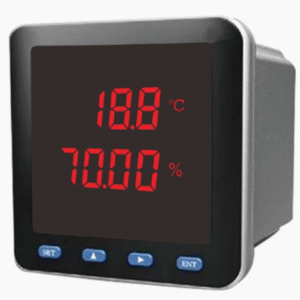
Temperature And Humidity Controller For Grow Room ZM-T
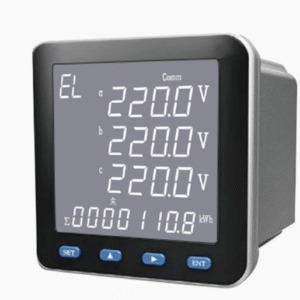
Digital Multifunction MeterThree Phase Digital Power Meter ZM – M
Digital Multifunction Meter
Can’t find the product you need? Click the button to contact us!
1.What is a Digital Multifunction Meter?
A digital multifunction meter is an advanced electrical measurement device that can measure and display various electrical parameters within a system.
This product features a built-in storage module that can record historical data and fault information (such as overvoltage, overcurrent, and undervoltage alarms), making it convenient for tracing power system operating conditions.
2.What are the disadvantages of using a Digital Multifunction Meter?
Although digital multifunction meters offer comprehensive functions and convenient digital readouts, they also have several practical shortcomings in real-world applications, specifically in these areas:
Digital multifunction meters are fully functional and provide intuitive and convenient digital readings, but they also have several significant drawbacks in practical applications:
Firstly, the initial investment cost is high, with the purchase cost of a single device being approximately 3-5 times that of traditional combination meters.
To implement remote monitoring, additional accessories such as RS485 communication cables and hubs (gateways) are required, along with the integration and debugging of a power monitoring platform.
For small power distribution scenarios, this type of investment can easily lead to wasted resources due to a mismatch between functionality and needs.
Secondly, the professional requirements for installation and debugging are high.
In terms of wiring, compared to the simple single-circuit wiring of traditional meters, multifunction meters require simultaneous connection of voltage, current, communication, and power circuits, and, as needed, switch/relay output circuits. The numerous terminals and complex wiring increase the risk of incorrect or loose connections, which can even lead to equipment damage.
During debugging, not only is on-site calibration of electrical parameter measurement accuracy required, but also professional personnel must use debugging software or on-site buttons to complete a series of settings, including communication parameters, metering parameters, and alarm thresholds.
Non-electrical professionals cannot operate them independently.
Thirdly, the integrated design leads to a “single point of failure” problem.
While a single fault in a traditional meter only affects a single function, if the core chip or communication module of a multifunction meter fails, all functions, including measurement, metering, communication, and alarms, will fail simultaneously. A single device failure can result in the loss of all power data for the entire circuit.
Fourthly, troubleshooting and maintenance are more difficult in the long run. Equipment malfunctions can occur at any point, including wiring, the instrument itself, communication links, and platform integration.
Troubleshooting requires specialized tools such as communication testers and multimeters to check each component individually, which is far less convenient than the traditional method of simply replacing the instrument.
This process is time-consuming, labor-intensive, and results in low maintenance efficiency. Furthermore, the electronic chips and communication modules inside the instrument are highly sensitive to voltage fluctuations, electromagnetic interference, and temperature and humidity changes.
If the strong electromagnetic environment generated by equipment such as inverters and contactors in the power distribution room is not effectively shielded, it can easily lead to instrument data drift, communication interruptions, or even system crashes.
Additional protective measures such as grounding and shielding are required, further increasing the workload of daily maintenance.
Fifth, it has high requirements for the basic conditions of the power distribution system, and its adaptability is poor in older power distribution scenarios, easily affecting the normal use of the equipment due to insufficient system infrastructure.