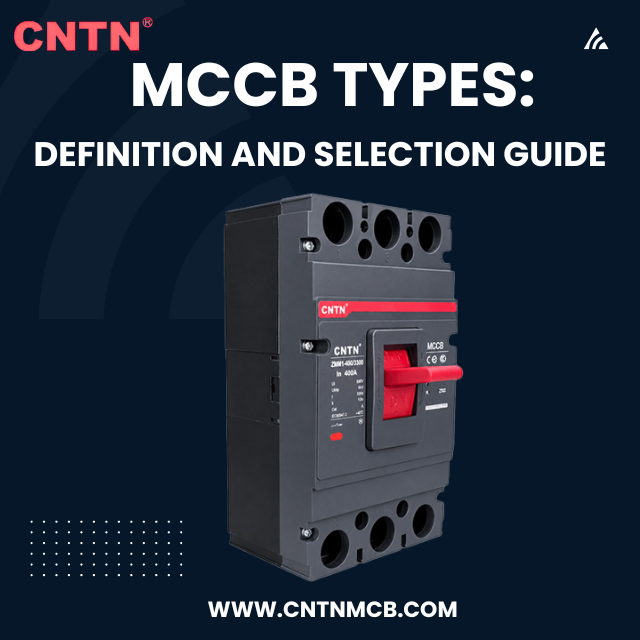
Disjuntor em caixa moldada (MCCB) é de grande importância na proteção de circuitos elétricos contra sobrecargas e falhas por curto-circuito.
A escolha do disjuntor MCCB adequado aumenta a eficiência operacional e garante a segurança.
No entanto, a escolha do modelo errado resultará em proteção insuficiente do equipamento, disparos frequentes e custos mais elevados de instalação.
Há vários fatores que devem ser levados em consideração na hora de selecionar o MCCB correto.
No entanto, os compradores devem levar em consideração esses fatores importantes, incluindo tensão, corrente de carga, corrente de curto-circuito prevista, condições ambientais e coordenação com outros dispositivos de proteção.
Hoje, nossa equipe apresentará informações sobre a definição de MCCB, os diversos tipos de MCCBs, suas características e aplicações.
Além disso, também forneceremos informações detalhadas para a escolha do MCCB adequado. Nossa equipe está à disposição para ajudar os compradores de MCCB e as empresas de instalação elétrica.
O que é um MCCB?
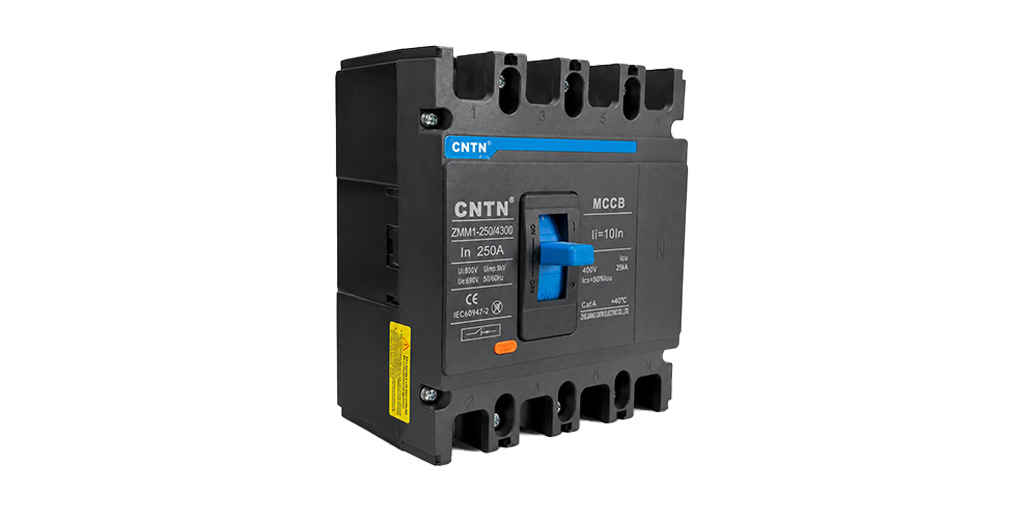
MCCB é a sigla para “Molded Case Circuit Breaker” (disjuntor em caixa moldada). Trata-se de um dispositivo elétrico cuja finalidade é interromper o fluxo de corrente no caso de ocorrer uma sobrecarga ou um curto-circuito no circuito.
Esse tipo de disjuntor está alojado em uma caixa moldada.
O disjuntor possui contatos condutores de corrente pelos quais a corrente passa normalmente.
Um dispositivo de disparo no disjuntor detecta qualquer condição anormal e abre os contatos caso seja necessária proteção.
De acordo com seu projeto, o dispositivo de desligamento pode ser do tipo termomagnético ou eletrônico.
Há também um mecanismo de extinção de arco no disjuntor.
Esse mecanismo se torna essencial durante uma falha de curto-circuito, na qual um arco elétrico gera muito calor como resultado da interrupção dos contatos.
A proteção oferecida pelos disjuntores MCCB é útil para proteger cabos, equipamentos de distribuição e cargas.
Quais são os principais tipos de MCCB?
A classificação dos disjuntores MCCB pode ser feita com base no mecanismo de operação, na capacidade de ajuste, no número de pólos, na corrente nominal e na aplicação.
Esse conhecimento ajuda o comprador a escolher o disjuntor adequado para sua aplicação.
1. Disjuntor magnético-térmico (MCCB)
Combinando as formas de proteção magnética e térmica, o disjuntor MCCB termomagnético foi projetado de forma a incorporar ambas as formas de proteção em um único disjuntor.
A parte térmica consiste normalmente em um interruptor bimetálico que se dobra após ser aquecido, acionando o disjuntor devido ao superaquecimento resultante de uma corrente de sobrecarga.
A operação magnética ocorre rapidamente em resposta à corrente de falha, a fim de permitir a desligamento do disjuntor em caso de curto-circuito.
Os disjuntores termomagnéticos (MCCBs) são amplamente utilizados em painéis de distribuição comerciais, circuitos de máquinas e distribuição de energia.
2. Disjuntor MCCB eletrônico
Um disjuntor MCCB eletrônico funciona por meio de sensores eletrônicos e de uma unidade de disparo que auxilia no monitoramento da corrente e na interrupção do circuito, dependendo de determinadas condições.
Em alguns tipos de MCCBs, geralmente há uma combinação de recursos de proteção ajustáveis de tempo longo, tempo curto, instantânea e contra falha de aterramento.
As unidades de disparo eletrônicas apresentam vantagens como maior precisão, melhor monitoramento e capacidade de coordenação com outros dispositivos de proteção.
As unidades de disparo eletrônicas também possuem recursos adicionais, como medição, alarme, comunicação e registro de eventos.
Os disjuntores MCCB eletrônicos são utilizados em instalações de alta tensão, especialmente em grandes edifícios comerciais e indústrias.
3. Disjuntor MCCB de disparo fixo
Os disjuntores MCCB fixos possuem parâmetros de proteção predefinidos, seja devido à forma como foram projetados, seja devido às configurações de fábrica.
É possível que, em alguns casos, o ponto em que ocorre o disparo não seja muito ajustável.
Esses disjuntores são adequados quando as cargas são conhecidas e não há necessidade de coordená-las com outros dispositivos de proteção.
A principal desvantagem é a falta de flexibilidade em relação a variações na carga ou a diferentes requisitos de coordenação. Os clientes devem verificar as configurações reais do disjuntor.
4. Disjuntor MCCB com disparo ajustável
Um disjuntor MCCB com disparo ajustável é aquele em que é possível alterar um ou mais de seus parâmetros de proteção dentro de um determinado intervalo permitido pelo fabricante do produto.
Isso dependeria do projeto específico do MCCB.
Essa é uma boa opção quando um engenheiro precisa dimensionar um disjuntor de acordo com determinadas características de carga do circuito e coordená-lo com outros dispositivos de proteção, seja a montante ou a jusante desse circuito.
O disjuntor MCCB com disparo ajustável é utilizado em diversas aplicações, incluindo distribuição industrial e máquinas.
No entanto, o ajuste não deve exceder os limites estabelecidos pelo fabricante.
Distinção importante
Essas classificações podem se sobrepor.
Por exemplo, um MCCB pode ser eletrônico, com disparo ajustável, tripolar e projetado para um determinado valor nominal de corrente, tudo ao mesmo tempo.
Os compradores devem considerar cada categoria separadamente, pois não se trata de categorias exclusivas.
Tipos de MCCB com base no número de pólos
O número de pólos indica o número de condutores do circuito controlados pelo MCCB.
A configuração adequada será selecionada com base na natureza da fonte de alimentação elétrica, no sistema de aterramento e nos requisitos do neutro.
MCCB de 1 polo
Um disjuntor MCCB de 1 polo controla apenas um condutor e pode ser adequado para determinadas aplicações com um único condutor.
Essas aplicações são menos comuns do que os disjuntores MCCB multipolares em muitos sistemas industriais de distribuição de energia.
O engenheiro de projeto deve garantir que o disjuntor seja capaz de atender a todos os requisitos de isolamento e proteção.
Não se pode presumir que o disjuntor unipolar isole todos os condutores do circuito.
MCCB de 2 pólos
Um disjuntor MCCB de 2 pólos comuta dois condutores e pode ser utilizado em sistemas monofásicos adequados.
Dependendo da configuração do sistema, esses condutores podem ser a fase e o neutro ou dois condutores sob tensão.
É importante que os consumidores verifiquem se os pólos com proteção contra sobrecorrente estão identificados e se o pólo neutro foi protegido por um interruptor.
MCCB de 3 pólos
Um disjuntor MCCB de 3 pólos é normalmente utilizado em aplicações trifásicas.
O disjuntor tripolar comuta as três fases e é utilizado em diversas aplicações, como quadros de distribuição industriais, motores, bombas, compressores e máquinas.
Deve possuir classificações adequadas para aplicações de corrente, tensão e curto-circuito apropriadas.
MCCB de 4 pólos
O disjuntor MCCB de 4 pólos atua nos condutores trifásicos, bem como no condutor neutro.
O disjuntor MCCB de 4 pólos é necessário quando há a necessidade de comutação do neutro no projeto da instalação.
Será importante levar em consideração o tipo da instalação, bem como as normas aplicáveis, ao selecionar o disjuntor de quatro pólos.
Comparação de configurações de postes
| Tipo de MCCB | Número de pólos | Aplicação típica | Destaque principal |
|---|---|---|---|
1 polo |
1 |
Circuitos específicos de condutor único |
Comutação unipolar |
2 polos |
2 |
Sistemas monofásicos adequados |
Controle bipolar |
3 polos |
3 |
Distribuição trifásica |
Comutação trifásica |
4 polos |
4 |
Sistemas trifásicos que exigem comutação do neutro |
Três fases mais o neutro |
Tipos de MCCB com base nas características de desligamento
As características de disparo são utilizadas para definir como o disjuntor reage a diversas intensidades de corrente.
As características de disparo ajudam os consumidores a escolher a proteção adequada para seus cabos, motores, transformadores e outros dispositivos elétricos.
Disparo térmico
O acionamento térmico normalmente reage a condições de sobrecarga.
Nos casos em que a corrente continua fluindo além do nível permitido, ocorre geração de calor e, por fim, o mecanismo de desligamento é acionado.
Disparo magnético
O disparo magnético responde rapidamente quando a corrente atinge um limite elevado, como, por exemplo, durante um curto-circuito. O nível exato de disparo depende do projeto do disjuntor e de suas especificações.
Unidades eletrônicas de disparo
As unidades de disparo eletrônicas monitoram eletronicamente a corrente, com a capacidade de definir parâmetros de proteção.
Dependendo do tipo de unidade de disparo eletrônica, podem existir várias funções, incluindo o atraso de tempo ajustável e o disparo instantâneo.
Dispositivo de disparo fixo e ajustável
Os disparadores fixos e ajustáveis referem-se à forma como as configurações de proteção são definidas, e não a tecnologias de detecção distintas.
Um disjuntor termomagnético de disparo fixo (MCCB) e um disjuntor eletrônico ajustável (MCCB) são exemplos de combinações diferentes.
Comparação das características da viagem
Ao escolher um disjuntor MCCB, recomenda-se que os clientes levem em consideração a característica real de disparo, a corrente de disparo e o tempo de atraso do dispositivo.
A categoria, por si só, não é um indicador da capacidade de coordenação com outros dispositivos de proteção.
| Tipo de viagem | Função principal | Resposta ou configuração | Adequado para |
|---|---|---|---|
Térmico |
Proteção contra sobrecarga |
Time-delayed response |
Sustained overloads |
Magnético |
High-current fault protection |
Rapid response |
Short-circuit faults |
Eletrônico |
Configurable protection |
Settings depend on trip unit |
Industrial distribution |
Fixo |
Predetermined protection settings |
Limited adjustment |
Standardized loads |
Ajustável |
Flexible protection settings |
User-configured within permitted limits |
Variable loads and coordination |
MCCB Types Based On Current Rating
MCCB comes in different ratings and sizes of frames according to the electrical load.
The rated current denotes the current that the breaker is capable of carrying, while the frame size represents its product size.
These values are related but are not interchangeable. A frame may support several current ratings or trip-unit options, depending on the manufacturer’s product range.
- Lower-current MCCBs may suit smaller distribution circuits and modest loads.
- Medium-current models are often used for commercial distribution, subdistribution panels, and machinery.
- Higher-current MCCBs may be appropriate for main distribution boards, large industrial loads, and substantial power distribution circuits.
No single current range separates these categories since the rating and frame sizes differ among manufacturers and product lines.
When selecting an adjustable type of breaker, the consumer will need to determine the adjustment range of the trip unit.
The frame size alone will not be sufficient basis for choosing a breaker, but rather the ratings of the breaker.
MCCB Breaking Capacity: What Does It Mean?
MCCB breaking capacity refers to the maximum current that can be interrupted by a circuit breaker under particular conditions.
It is perhaps one of the most significant things to consider when choosing a breaker to install in an electrical setup.
Short circuits happen where there is an accidental low resistance that causes the flow of very high currents. Prospective fault current is the current that would flow if a fault happens at a particular location in an electrical setup.
Therefore, buyers must determine the prospective fault current at the installation location and compare it with the breaking capacity of the MCCB.
Icu: Ultimate Short-Circuit Breaking Capacity
Icu is the ultimate short-circuit breaking capacity.
It indicates the short-circuit current level the breaker can interrupt under the specified test conditions.
It does not, by itself, guarantee that the breaker will remain suitable for continued normal service afterward.
Ics: Service Short-Circuit Breaking Capacity
ICS stands for the service short circuit breaking capacity.
This parameter is associated with the capability of the breaker to interrupt the specified current fault and also comply with all post test serviceability requirements.
ICS is normally presented as a percent of Icu; however, the range of values is determined by the specific product and standard applied.
ICS is used to specify the performance after the required tests; however, Icu represents the maximum interruption capability.
Selection Principle
MCCB’s breaking capacity must be suitable for the prospective short-circuit current at the installation point.
Buyers should also review applicable backup protection and coordination requirements.
MCCB Ratings: What Specifications Should Buyers Check?
Selecting an MCCB requires reviewing several technical specifications, not just the ampere rating.
A breaker with the correct current rating may still be unsuitable if its voltage, breaking capacity, pole configuration, or trip characteristics do not match the installation.
The following table summarizes important specifications buyers should review before purchasing an MCCB.
| Especificação | What It Means |
|---|---|
Corrente nominal |
Current the MCCB is designed to carry under specified conditions |
Tensão nominal |
Voltage for which the MCCB is rated for the specified application |
Número de pólos |
Number of conductors the breaker is designed to switch |
UTI |
Ultimate short-circuit breaking capacity |
Ics |
Service short-circuit breaking capacity |
Unidade de deslocamento |
Mechanism that senses faults and initiates tripping |
Frequência |
Compatible AC system frequency, where applicable |
Frame Size |
MCCB frame or current class within the product range |
Buyer should also look at the trip curve, adjustment range, terminal capacity, mounting system, auxiliary contacts, shunt trips, undervoltage releases, and any other necessary accessories.
For installations involving severe environmental conditions, ambient temperature considerations, effect of enclosures, altitude derating, and installation instructions specific to the manufacturer may also become a factor.
The full technical data sheet is important because even if two MCCBs have nearly identical current capacities, specifications can differ from one series to another.
MCCB Selection Guide: How To Select An MCCB

The selection of appropriate MCCB calls for an analysis of the circuit, faults that might occur, and environmental conditions.
The following process will help to select appropriate MCCBs and check their specifications.
1. Determine the load current
Calculate the expected operating current using the supply voltage, load power, power factor, and efficiency where applicable.
For three-phase loads, use the appropriate three-phase calculation. Consider continuous operation, starting current, conductor ampacity, and applicable electrical design requirements before choosing a rating.
2. Check the system voltage
Check the nominal system voltage and the pole-to-pole voltage during normal operation.
The MCCB should have the appropriate operating voltage rating for its use. Also check the manufacturer’s rating for the AC or DC circuit.
3. Select the number of poles
Choose a suitable two-pole configuration for applicable single-phase systems, a three-pole MCCB for typical three-phase circuits, or a four-pole model where neutral switching is required.
Confirm neutral protection and isolation requirements against the system design and local standards.
4. Determine the short-circuit current
Find the expected fault current from studies or calculations of the power system or from the data source of supply.
Choose a suitable MCCB having sufficient Icu value at that particular voltage level. The Ics values should also be considered.
5. Choose the trip type
Thermal-magnetic MCCBs can suit many standard distribution circuits.
Electronic trip units may be preferable when precise adjustment, time delays, monitoring, or selective coordination is important.
Compare fixed and adjustable options according to the required protection functions.
6. Check the current adjustment range
Regarding an adjustable MCCB, make sure the desired setting is within the allowed range from the manufacturer.
The setting should protect the circuit conductors and equipment; there should be no use of flexibility to allow an improper breaker size.
7. Consider ambient temperature
High temperatures can affect current-carrying performance and trip behavior.
Check manufacturer derating information and consider the temperature inside the panel rather than relying only on the surrounding room temperature.
8. Review installation conditions
Check dimensions of panel enclosure, ventilation, clearance, altitude, moisture, dust, and any other environmental factors.
Ensure that you meet any derating requirements and select the appropriate enclosure or accessories to use.
9. Consider selective coordination
Review the characteristics of upstream and downstream protective devices.
Appropriate coordination can help isolate faults closer to their source and reduce unnecessary shutdowns.
Use manufacturer coordination tables or engineering studies when required.
10. Verify standards and manufacturer data
Verify standards, product certification, accessories, terminal configuration, and installation instructions.
Review the datasheet for the specific model before making your purchase to verify that the selected circuit breaker is appropriate for your application.
MCCB Vs MCB: Which One Should You Choose?
MCCBs and Miniature Circuit Breakers (MCBs) both provide protection against overcurrent conditions, but they are designed for different ranges of applications
The best choice depends on load requirements, fault levels, adjustment needs, and the electrical distribution design.
MCCB vs MCB Comparison
| Recurso | MCCB | MCB |
|---|---|---|
Current capacity |
Generally higher |
Generally lower |
Capacidade de ruptura |
Often higher, model-dependent |
Often lower, model-dependent |
Trip adjustment |
Available on many models |
Usually limited |
Aplicativos |
Commercial and industrial distribution |
Residential and light commercial circuits |
Tamanho |
Generally larger |
Generally more compact |
Protection flexibility |
Often greater |
Usually simpler |
Coordination options |
Broad options in suitable product ranges |
Depends on the device and system |
Common MCCB Applications
MCCBs are used in many electrical installations because they can provide suitable overload and short-circuit protection across a wide range of current ratings and system configurations.
- Industrial power distribution:MCCBs protect distribution feeders supplying production equipment, workshops, and industrial subpanels. Breaking capacity and coordination are especially important where fault levels are high.
- Commercial buildings:Office buildings, shopping centers, and large facilities use MCCBs in suitable main and sub distribution circuits to protect feeders and electrical equipment.
- Motors and machinery:MCCBs can provide short-circuit and overload protection when properly selected and configured. Motor starting currents and coordination with contactors and overload relays must be considered.
- Generator systems:MCCBs may protect generator outputs or connected distribution circuits. Their ratings must suit generator fault characteristics and the system’s operating arrangement.
- Transformer protection:MCCBs may protect transformer-connected circuits when their ratings and protection characteristics suit transformer inrush current and available fault current.
- Solar power systems:Suitable MCCBs may be used in applicable AC distribution circuits and in specifically rated DC applications. Buyers must verify DC voltage, polarity, interruption ratings, and product suitability.
- Main distribution panels:MCCBs can protect incoming or outgoing feeders and help coordinate distribution circuits.
Common Mistakes When Selecting An MCCB
Even a reputable MCCB can be unsuitable if it does not match the circuit’s requirements. Avoid these common selection mistakes:
- Selecting only by ampere rating:The current rating must suit the load and conductor design, but voltage, trip characteristics, and breaking capacity also matter.
- Ignoring prospective short-circuit current:An MCCB with insufficient breaking capacity may be unable to interrupt the available fault current safely.
- Choosing an incorrect voltage rating:Verify the system voltage and the manufacturer’s rated operational voltage for the intended application.
- Selecting the wrong number of poles:An unsuitable pole arrangement may fail to meet the system’s switching or isolation requirements.
- Ignorando as características da viagem:The trip curve and settings must protect the circuit without causing inappropriate tripping during normal operating conditions.
- Choosing unsuitable breaking capacity:Check Icu at the applicable voltage and review Ics where continued serviceability after interruption is important.
- Ignoring ambient temperature:High panel temperatures may require derating or a different breaker selection.
- Forgetting selective coordination:Poor coordination can cause an upstream breaker to trip unnecessarily, interrupting more of the installation than needed.
- Choosing only by price:A lower purchase price may not represent the best value if the breaker lacks required ratings, accessories, or protection functions.
- Skipping the technical datasheet:Similar-looking MCCBs can have different ratings and limitations. Verify the exact model before approving a purchase.
MCCB Selection Checklist
This is a practical checklist to use prior to buying your MCCB. It ensures that buyers, assemblers, and electrical contractors ensure all design features have been met in order to avoid buying the wrong item.
- Load current calculated
- System voltage confirmed
- Number of poles selected
- Prospective short-circuit current determined
- Icu and Ics checked
- Trip mechanism selected
- Fixed or adjustable trip confirmed
- Current adjustment range checked
- Ambient temperature and derating considered
- Installation conditions reviewed
- Selective coordination requirements considered
- Applicable standards and certifications verified
- Manufacturer’s technical datasheet reviewed
Considerações finais
Following a proper selection procedure for MCCB would help the buyers make proper purchase decisions. Below these parameters play an important role in deciding the compatibility of the breaker for the specific circuit.
Apart from choosing an appropriate breaker according to the load current to be supplied, buyers need to look at the trip mechanism, voltage rating, number of poles, current rating, breaking capacity, and environmental conditions.
CNTN Elétrica provides MCCB solutions for industrial and commercial power distribution applications. Visit our website to explore the available MCCB products and contact the team for product specifications, pricing, and assistance in selecting a suitable circuit breaker for your requirements.