In electrical systems, protection devices are necessary for safety. Because they avoid damage to electrical systems for overloads, short-circuits and unforeseen current fluctuations. It is helpful in homes, businesses and factories.
To understand the difference between Miniature Circuit Breaker (MCB) and fuse, it is essential. Both devices are used for electrical protection and both are working on different principle. They have a significant effect on the performance, reliability, maintenance and overall efficiency of an electrical system.
In this blog, we will explain the core difference between MCB and a fuse. We will cover their definitions, working principles, advantages, and applications. However, we will help to select an appropriate type of electrical protection device.
Why Choosing The Right Electrical Protection Device Matters
Choosing an appropriate protective device ensures that both electrical systems and connected equipment are safe throughout use.
Correct protection devices prevent damage, and reduce fire hazards. Ultimately, it increased efficiency within the operation of electrical systems.
An appropriate selection of protection devices will help to lower maintenance costs. So, it assists with providing the electrical system with long-term reliability.
By using correct types of protective devices, the end-user will be protected from electrical shock. However, it maintains consistent levels of electricity flowing through the electrical system.
What is an Miniature Circuit Breaker (MCB)?
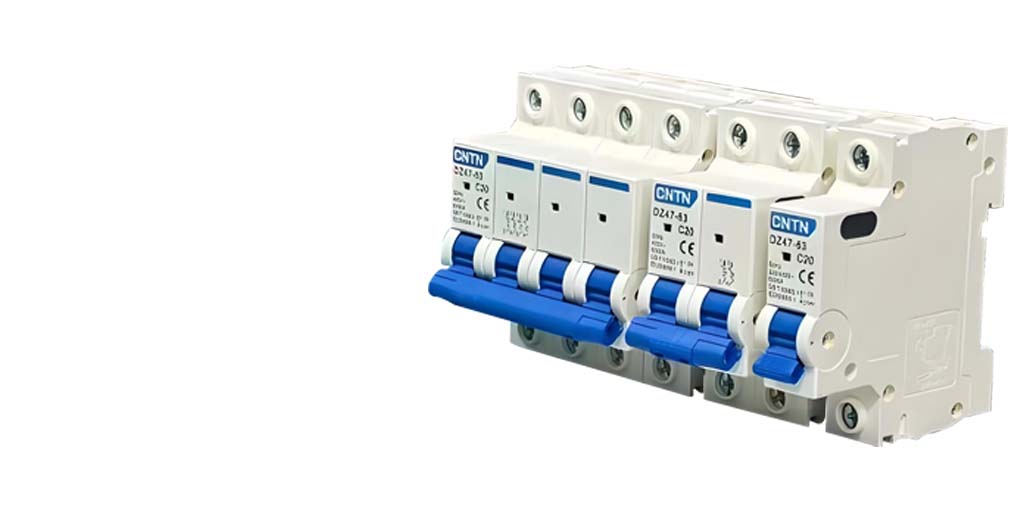
MCB is an electrical safety device that automatically intervenes to protect circuits from damage due to current flow.
When an abnormal current is detected, it interrupts electrical service instantly, preventing a hazard.
What is a Fuse?
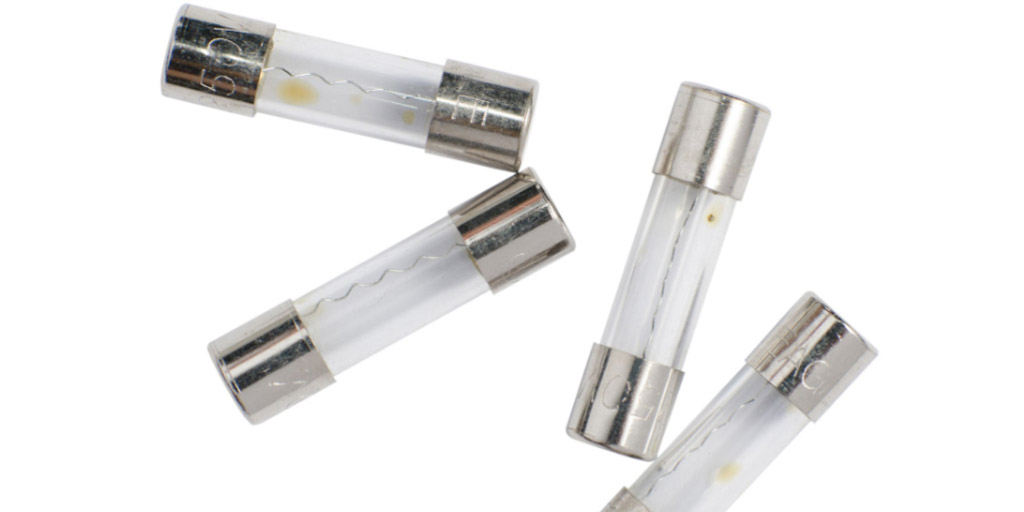
Fuses are a form of electrical circuit protection against overloads of too much voltage protecting against burn out of circuit components.
It contains a thin wire. So, it melts or fuses together when the current exceeds the maximum operating current through the fuse.
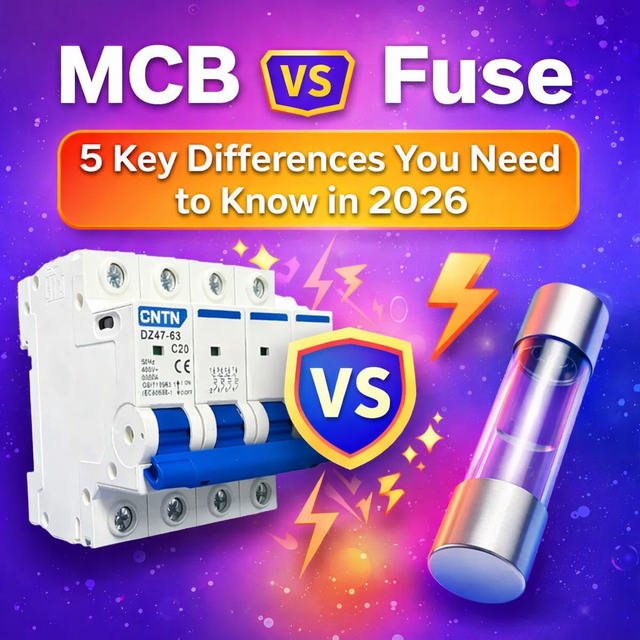
MCB Vs Fuse: 5 Key Differences
A quick overview of differences between MCB and fuse is shown based on key factors.
| Feature | MCB (Miniature Circuit Breaker) | Fuse |
|---|---|---|
Working Principle |
Automatically trips when fault is detected |
Melts when current exceeds safe limit |
Reusability |
Can be reset and reused multiple times |
Must be replaced after each operation |
Response Time |
Slightly slower but more controlled |
Very fast response to overload |
Cost |
Higher initial cost but long-term savings |
Low initial cost but recurring replacemen |
Application |
Used in modern homes and industries |
Common in older systems and basic circuits |
1: Working Principle
In case of any fault, MCB has an internal device that constantly checks for faults and cuts off power. So, there is less chance to damage electrical circuits through electrical faults.
Fuse has a metal length that will melt when there is too much current flowing through it. That’s why it will break a circuit.
MCB combines both thermal and magnetic trip devices. It provide continuous and dependable protection against overload and short circuit conditions.
Fuse will depend on heat due to excessive current flow in order to open the electrical circuit.
2: Reusability And Replacement
Manual Reset MCBs ease the use of Multitrip- and Reuse Cycle-type devices.
Fuses require replacement after a blown fuse causing unnecessary costs and increasing the frequency of maintenance.
MCBs allow reduced downtime by quickly resetting the unit after it’s been repaired.
Fuses will require a physical replacement in order to restore power to a system. So, fuses often cause an extended delay in restoring power to critical systems due to the physical replacement of the fuse.
3: Response Time And Protection Level
Fuses react very quickly to the overload. In this way, they provide immediate protection against electrical failures.
Miniature Circuit Breakers (MCBs) have a slightly slower reaction time. But they offer stable and controlled overload protection to the circuit.
MCB can differentiate between a momentary trip and a real electrical problem. It prevents unnecessary or false tripping.
Fuses do not have this type of ability. They can fail to operate due to a small or momentary increase in the amount of electrical power used.
4: Cost And Long-Term Value
MCB has a higher initial cost. It is more cost effective in terms of its long term usability.
Fuse is less expensive but the high number of replacements increases your overall costs over the long run.
MCB reduces your total cost of maintenance. Due to it eliminating your need to purchase replacement parts on an ongoing basis.
Fuse could potentially be expensive over time as the number of purchases and replacements will continue to add up.
5: Application And Usage Areas
In today, MCBs are often used in electrical equipment in homes, businesses, and manufacturers.
In contrast, fuses are primarily found in older installations and basic circuits. They do not require advanced protective features.
In terms of safety and reliability, MCBs are generally more reliable than fuses in complicated systems. Therefore, they are commonly used in situations where both need to be a priority.
However, fuses can still be found in simple applications where complex functions are unnecessary.
Advantages Of MCB Over Fuse
MCB includes both automatic operation and readily reset capabilities. So, it makes them safer and more convenient than traditional breaker types.
MCB will give you consistent performance. It decrease how many times you will need to perform maintenance or replace it.
MCB provides superior protection against overload, short-circuited and faulty electrical systems.
MCB operation enhances system reliability with less time lost due to system failure. But it leaving you little doubt that power will always be available when needed.
Advantages Of Fuse Over MCB
Fuse response is significantly faster than any other type of current-limiting device. It allows to protect against rapid rising currents.
There is no complexity in the design of a fuse and there are no moving parts in its operation.
Fuses tend to be inexpensive. They are more desirable to use in low-cost or budget situations.
A fuse is usually easy to install and a user does not need to have a lot of technical knowledge to use it properly.
When Should You Choose MCB Or Fuse?
Select a miniature circuit breaker (MCB) for high-level protection, reusability, and dependability in contemporary applications.
If you are looking for an inexpensive, basic protection option for your circuits, choose a fuse.
MCB is good for both home and industry applications where safety and efficiency are a priority.
Fuses can be used as a low-cost backup option or for minor devices that do not need a high level of protection.
Final Thoughts
Keeping electrical circuits safe from damage is an extremely important function. Both MCB and a fuse are responsible for this function. Each of these devices has different advantages depending on their specific requirements.
By selecting an appropriate device, you help to ensure the continued safety, efficiency, and reliability of the system.
By understanding this guide, you can make a more informed decision which device will work best for your application.
CNTN specializes in delivering advanced electrical protection solutions for modern power systems.
Visit CNTN Electric help to determine which protection device is best for your system.
Frequently Asked Questions (FAQs)
Q1: Can MCBs protect against electric shocks?
Answer: MCBs protect circuits from overloads and short circuits, but not from electric shock.
For shock protection, devices such as RCCB or ELCB must be used in the electrical system.
Q2: Which device is safer for modern homes, MCB or fuse?
Answer: Modern household safety is enhanced primarily through MCBs that feature automatic tripping and resetting capabilities.
They allow greater control over the electrical system and reduce the risk of electrical accidents during regular use.
Q3: Do MCBs require regular maintenance like fuses?
Answer: As compared to fuses, MCBs require minimal maintenance.
Fuses must be replaced after they have interrupted power once. However, MCBs can be reused without being replaced.
Q4: Can both MCB and fuse be used together in one system?
Answer: Both devices can work together to create layers of protection within your electrical system.
Utilizing both devices at once will increase your safety because you’ll have double protection against electrical faults.
Q5: How do environmental conditions affect MCB and fuse performance?
Answer: Both fuses and MCBs will respond differently under extremely hot or cold conditions.
The correct installation helps to provide dependable performance even when the environment changes.