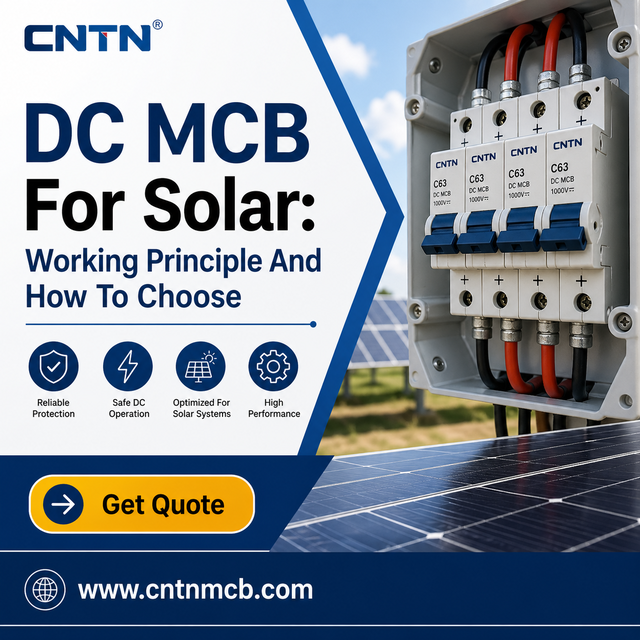
Reliable DC protection is needed to protect solar systems from failures. Selecting the correct DC MCB for solar will provide security, stability, and extended life of the system.
In order to prevent damage to the related panel, wiring, or other solar equipment, a DC MCB is used in solar PV systems to protect against overload and isolate circuits with faults.
In this article, we will explain the basics of a DC MCB, how they function, and how to choose the right one for your solar panel kit.
What is a DC MCB For Solar Systems?
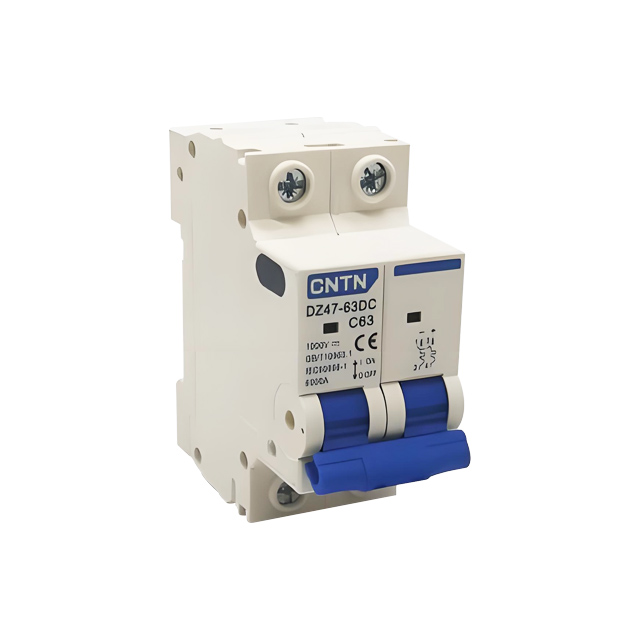
The DC MCB for Solar is a circuit breaker that is utilized in a Direct Current (DC) supply. It protects the solar circuits against overload and short circuiting effectively. Photovoltaic systems and solar power systems frequently utilize this component.
To avoid equipment damage or hazard, disconnections must occur safely when there is a fault. When it comes to solar, the DC MCB is used, which enables improved system reliability and increased energy output stability
Why DC Protection is Different in Solar Systems
Solar PV systems produce high-voltage DC, with current flowing continuously in one way.
Arc temperatures can reach 3,000degC. This makes faults more difficult to extinguish.
AC circuit breakers use the 50/60Hz zero crossing to interrupt faults. DC circuits do not have this characteristic and require specialized DC protection.
Working Principle of DC MCB in Solar Applications
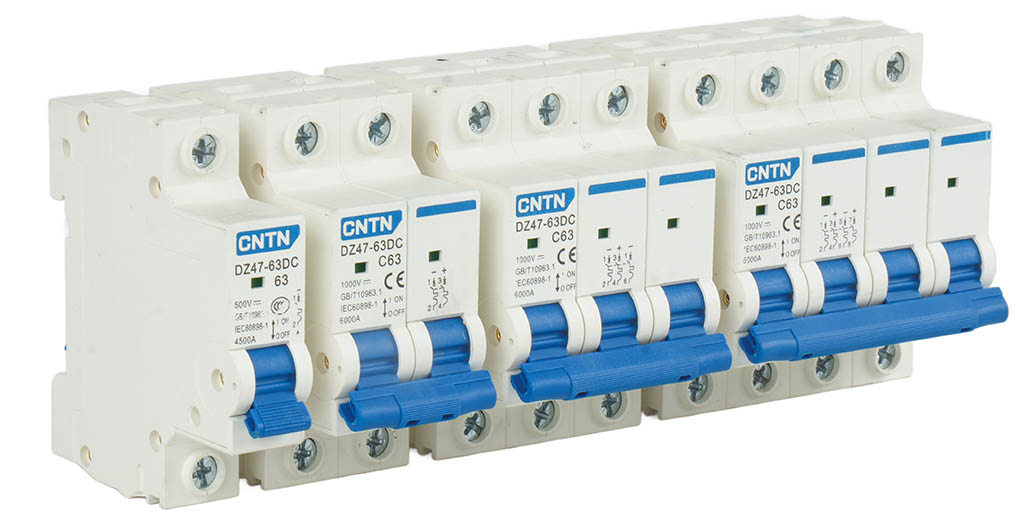
DC MCB for solar use thermal and magnetic mechanisms to protect. Thermal protection bends internal components to respond to overload conditions.
Magnetic tripping is a system that reacts immediately to any short circuit currents in the system.
Arc extinguishing Chambers safely break DC continuous arcs when circuit interruption occurs.
It also protects the solar components against electrical damage.
Key Technical Specifications of DC MCB For Solar
If you select the correct specifications, solar systems can be operated safely, efficiently and reliably.
| Parameter | Requirement | Importance | Application |
|---|---|---|---|
Voltage |
Match system voltage |
Ensures safe operation |
Solar panels |
Current |
Based on load capacity |
Prevents overload |
Home systems |
Breaking Capacity |
Handle fault current |
Stops short circuits |
Large installations |
Poles |
Single or multi-pole |
Provides isolation |
PV systems |
Tripping |
Thermal + magnetic |
Detects faults quickly |
Inverters |
Mounting |
DIN rail or panel |
Easy installation |
Control panels |

DC MCB For Solar: 5 Key Selection Factors
Choosing the right DC MCBs is essential for avoiding system failures, enhancing safety, and safeguarding solar equipment.
1: Voltage Rating Selection
The solar system voltage should be the same as the voltage rating. The wrong choice of voltage may cause failure of equipment and unsafe operation.
Select DC MCBs where the voltages exceed those needed by the solar system. When the voltages are compatible, the system will run reliably and steadily.
2: Current Rating Calculation
The existing rating is calculated considering the total load along with the expected flow of current. Electrical faults may occur due to large ratings.
Interrupting the system needlessly may take place due to small ratings. Use precise calculations to select DC MCBs for solar.
3: Breaking Capacity Requirement
The breaking capacity is the highest current that a device can break. More breaking capacity gives safety from high currents.
In case of any faults, low capacity breakers can break down and lead to serious damage to the system.
Use DC MCBs for solar systems, according to their size.
4: Pole Configuration Selection
Configuration of the pole will define the number of conductors that are disconnected in case of a fault.
Simple systems requiring limited isolation use single pole breakers.
In the case of solar systems, multi-pole breakers provide better isolation.
Select DC MCB according to your system design.
5: Application-Based Selection
Solar panels used for different purposes require varied protection levels depending on usage conditions.
For household use, you require minimal protection through a DC MCB.
In order to provide superior protection for commercial use, equipment must be high-rated and long-lasting. Select components suitable for your system’s complexities and loads.
Common Mistakes When Choosing DC MCB For Solar
Voltage selection mistakes may pose safety risks and cause system malfunctioning.
Poor protection performance is due to the use of AC breakers instead of DC MCBs on solar panels.
Inadequate circuit protection and tripping are the consequences of improper current selection.
High fault currents can cause system failure when not taken into account. Improper installation practices reduce efficiency and safety for solar panels.
Advantages of Using DC MCB in Solar Systems
The solar DC MCB gives reliable protection from overloads and short-circuits.
In case of any faults, it can easily be reset and reused again.
Through protection of components of the solar system, it improves safety in the system.
It is reliable and durable in use in the solar system.
Limitations of DC MCB
DC MCB for solar installations are relatively more costly compared to regular fuse devices.
For best results, complicated systems should be carefully selected and installed.
Incorrect selection will reduce their effectiveness and affect their safety.
Before selecting DC MCBs for solar installation, one must have a clear understanding.
When Should You Use DC MCB In Solar Projects?
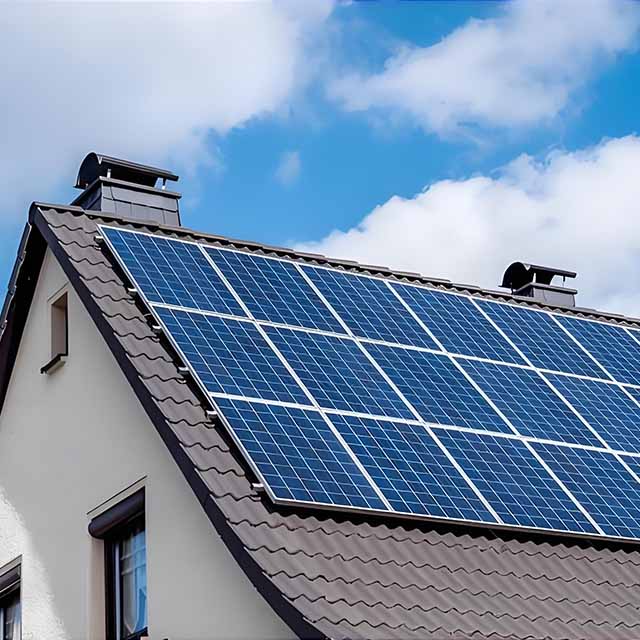
DC MCBs can be found in many residential rooftop solar systems. They protect the PV strings, inverter connections and other components from overloads and circuit shorts.
They are used in commercial solar installations to protect higher-capacity DC systems handling greater current loads.
These MCBs are essential for off-grid systems that use battery storage and require stable DC protection.
DC MCBs are used in solar farms that use a utility-scale for fault isolation.
Why Proper DC Protection is Critical in Solar Systems
Fires caused by continuous DC arc faults can be avoided with proper protection.
This protects expensive solar apparatus from damage due to overloads.
A reliable DC MCB for solar ensures lasting performance and safety.
Moreover, it reduces maintenance issues and improves efficiency in solar applications.
Final Thoughts
DC MCB is required for solar systems that should prove reliable and safe. An understanding of its operation helps determine the proper protective equipment. Selection of the correct specifications ensures proper system functioning in the future.
Working with a reliable suppliers to get quality certified safety products.
CNTN® has a commitment to providing reliable DC protection for solar projects around the world.
Consult with our team to get the best DC MCBs for your solar system.
Make good decisions to ensure that your solar system lasts long.

Frequently Asked Questions (FAQs)
Q1: Can DC MCB be used in AC systems?
Answer: Solar DC MCBs are designed to be used only in DC applications. The device may not provide sufficient functionality or safety in air conditioner units.
Q2: How long does a DC MCB last in solar systems?
Answer: If fitted correctly, DC MCB for solar generally functions for several years. For solar panels, inspection will ensure reliable performance and longevity.
Q3: Is DC MCB mandatory for solar installations?
Answer: The majority of solar systems need a DC MCB in order to meet the necessary safety requirements. It successfully guards against electrical fault damage and aids in equipment protection.
Q4: What happens if DC MCB for solar rating is too low?
Answer: During regular system operation, a low-rated DC MCB for solar may trip frequently.
This may disrupt electricity production and drastically lower system efficiency.
Q5: Can DC MCB handle high temperatures in solar setups?
Answer: The DC MCB for solar is made to function safely in a variety of environmental circumstances. Performance is guaranteed even in hot sun situations with proper installation.
Q6: How is DC MCB different from fuse in solar systems?
Answer: Unlike conventional fuse devices, DC MCBs for solar can be reused after tripping. After use, the fuse must be replaced, which raises the expense of upkeep and operations.
Q7: Where should DC MCB be installed in solar systems?
Answer: Solar DC MCBs are often placed in the space between the inverter and panels. During malfunctions or maintenance procedures, it guarantees protection and safe separation.