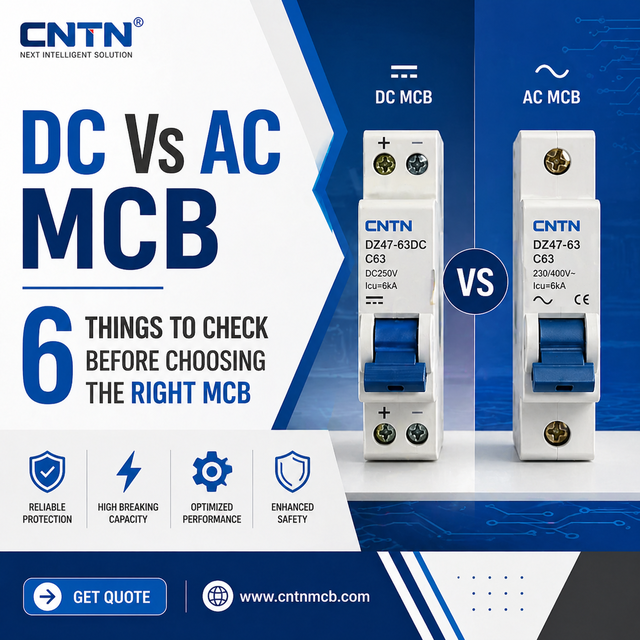
Protection of circuit is one of the most important things in any electrical circuit system that prevents overload, short-circuits, and equipment damage. It is extremely important to know the distinction between DC vs AC MCBs.
Both DC vs AC MCBs have been designed to safeguard electric circuits against faults. These devices automatically cut off the power in the event of any overload or short circuit problems.
In this blog, we will inform you about differences between DC vs AC MCBs. We will provide different factors for selecting the right MCB. However, we will also give technical specifications, and useful advice to help you select the appropriate device.
What is a DC MCB?
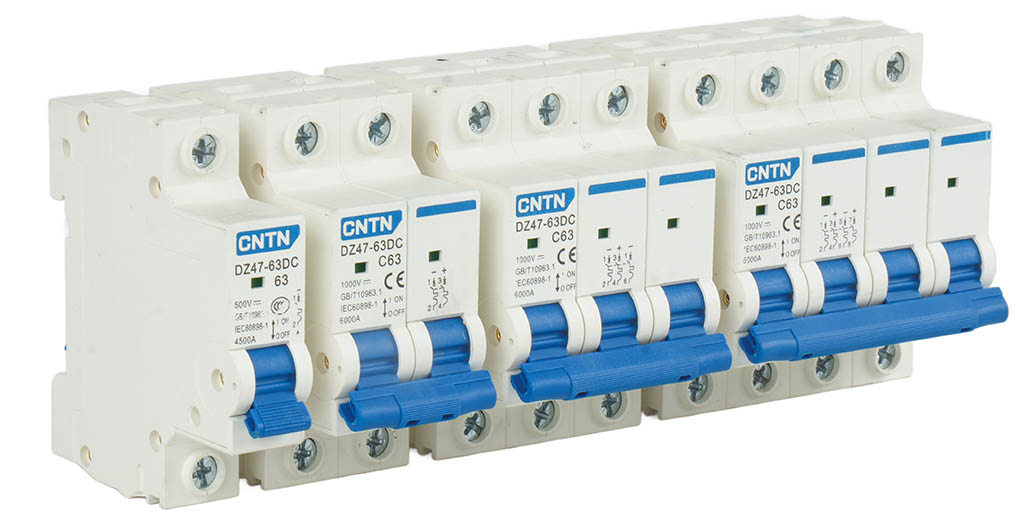
The DC MCB is manufactured to serve the purpose of safeguarding the electrical circuit that conducts electricity through only one way.
When there is an overload or a short circuit, it automatically shuts off.
DC MCBs are used in many places such as in solar energy systems and electric vehicles.
What as an AC MCB?
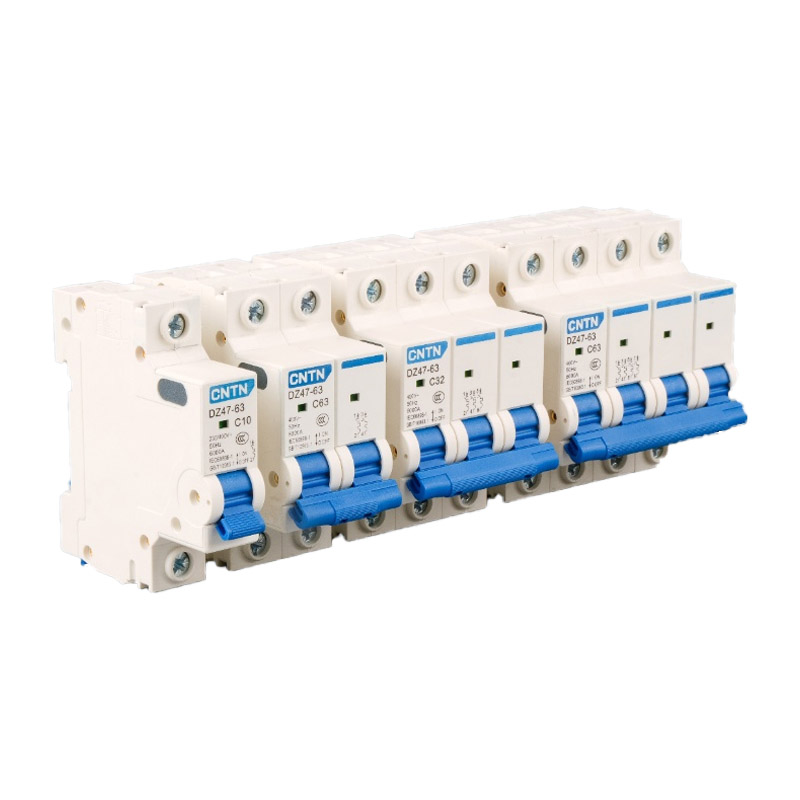
The AC MCB is used to protect the circuits that have alternating current flow in them.
This circuit breaker automatically switches off whenever there is an overload or failure of power in the circuits.
The use of AC MCB is very common in houses and business premises.
DC Vs AC MCB: Key Differences Table Overview
Before choosing an MCB, it is important to examine both types side by side in order to gain an understanding of the areas in which each type performs the best.
| Feature | DC MCB | AC MCB |
|---|---|---|
Current Type |
Direct current (constant flow) |
Alternating current (changing direction) |
Arc Behavior |
Continuous arc, harder to extinguish |
Arc naturally extinguishes at zero crossing |
Voltage Handling |
Designed for DC voltage stability |
Designed for alternating voltage cycles |
Applications |
Solar systems, batteries, EVs |
Homes, offices, industries |
Cost |
Higher due to complex design |
Lower due to simpler mechanism |
Safety |
Requires stronger arc control |
Easier arc suppression |
DC Vs AC MCB: 6 Things To Check Before Choosing
In order to select the most appropriate MCB for improved electrical safety and efficiency, it is important to be familiar with these fundamental distinctions.
1. Current Type Compatibility
The selection of the right MCB is based on the type of current that the system uses.
DC circuits use DC MCBs since there is no interruption in the flow of current.
On the other hand, AC MCBs are suitable for circuits using alternating current, whic
2. Arc Extinguishing Capability
DC circuits generate constant arcs that are difficult to break down than those generated by AC circuits. DC MCBs have arc chambers designed to facilitate arc extinction.
On the other hand, arc extinction for AC MCBs occurs automatically at the point of zero crossing of the current waveform.
3. Voltage Rating
The voltage rating should be compatible with the system needs for efficient performance. DC MCBs function with consistent voltage supply.
The AC MCBs operate with variations in voltage due to the alternating current cycles.
It is essential to choose the right voltage rating to avoid any problems in operations.
4. Breaking Capacity
The breaking capacity refers to the maximum amount of fault current that can be interrupted by the circuit breaker safely.
DC MCBs are built for high fault current due to constant current flow.
The AC MCB uses interruption when the current is zero in its cycle to handle the fault current.
5. Installation Environment
The installation environment also holds significance in determining the right MCB for your application.
DC MCBs are perfect for use with solar cells, batteries, and outdoors.
On the other hand, AC MCBs are widely used indoors in homes and businesses.
Temperature and environmental exposure affect their efficiency.
6. Cost And Long-Term Performance
The DC MCBs have greater upfront costs owing to sophisticated arc fault management technology.
Nevertheless, they provide dependable service for many years when used in specific applications such as solar cells.
On the other hand, the AC MCBs are more economical and can be applied in various cases.
Common Mistakes To Avoid Before Choosing DC Vs AC MCB
By avoiding these typical pitfalls, electrical safety, system performance, and dependability can be enhanced over time.
- AC MCB used in DC systems results in arc failures and damage to the equipment.
- Inappropriate selection of voltage rating limits efficiency and creates chances for failure of the electrical system.
- Neglecting the breaking capacity makes the MCB fail when there is excessive fault current.
- Poor quality selection impacts system reliability and creates challenges for maintenance and safety.
- Incorrect installation limits efficiency and creates challenges for the electrical system.
Application-Based Selection Guide
Different MCB types are needed for different electrical applications depending on system design, safety requirements, and current flow.
For Solar Systems
The solar system needs DC MCBs due to their requirement for direct currents at all times.
The DC protection is required for safety purposes and protection against panel and inverter damage.
For Residential Use
AC MCBs are used in homes for protecting circuits against short circuits and overload.
They assure protection to appliances and wiring and offer safe distribution of electricity.
For Industrial Applications
There might be instances where DC vs AC MCBs are necessary for industrial applications.
Selecting the appropriate MCB guarantees the safeguarding of heavy machinery and control mechanisms, among others.
Why Choosing the Right MCB Matters?
Selection of the correct type of MCB is critical in safeguarding electrical systems and averting any possible dangers.
With a properly selected MCB, electrical equipment can be adequately protected against overloads and short circuits.
The efficiency of the system will also be improved as far as proper flow of electricity is concerned.
Failure to use the correct MCB could pose certain challenges in terms of malfunction and possible electrical fires.
DC Vs AC MCB: Which One Should You Choose?
Selection between DC vs AC MCB depends upon the type of electric system in use.
A DC MCB is the best option for a system that uses solar power, batteries, or electric vehicles.
In residential or office buildings or electric circuits, AC MCB is still recommended.
Pro Tips Before Buying An MCB
By making a few intelligent purchasing decisions, you can prevent expensive electrical malfunctions and enhance the long-term protection of your system.
- Make sure to consider voltage and current ratings while choosing an appropriate MCB.
- Choose a product that is properly certified to make sure of safety and reliability.
- Keep future upgrades in mind while deciding on the MCB capacity.
- Make sure that proper installation takes place through skilled hands.
- Compare the qualities and warranties of the available options.
Final Thoughts
To choose the correct form of protection devices, it is crucial to know the difference between DC vs AC MCB. Every kind of MCBs is designed to serve a particular purpose and has its own set of applications.
If you’re working on solar projects, residential wiring or industrial equipment, selecting the right MCB will improve safety, prevent system failures and ensure long-term performance. Before making a final decision, always consider the technical specifications, certifications and application requirements.
Looking for a reliable circuit protection partner to help you with your next project or installation? CNTN Electrical offers certified DC and AC MCBs for solar systems and residential applications.
We also provide solutions for industrial projects and EV infrastructure. Contact with our team to learn more about our customized solutions
Frequently Asked Questions (FAQs)
Q1: Can AC MCB be used in DC systems?
Answer: AC MCB does not work with DC applications because of difficulties related to arc handling. Using AC MCBs in DC applications could result in hazards and malfunctions of protection.
Q2: Why are DC MCBs more expensive than AC MCBs?
Answer: DC MCBs demand sophisticated arc extinction techniques due to the continuous current flow requirement. This adds to their production difficulty and makes them more expensive than AC MCBs.
Q3: Where are DC MCBs commonly used?
Answer: DC MCBs can be found in solar power systems, battery storage, and even electric vehicles. They give good protection for systems that run on DC current all the time.
Q4: What happens if wrong MCB is selected?
Answer: The use of the wrong MCB type results in bad protection and system failure. This may also result in the occurrence of fires, damage, and hazards related to electricity.
Q5: How to choose the right MCB for my system?
Answer: Choose MCB by considering its existing kind, voltage rating, and application needs. Seek expert advice if uncertain about making the right choice.